If you move product in tonnes, not kilos, you’ve probably wondered whether your 50 kg sacks are costing you more than they should. The question usually comes down to FIBC bags vs regular bags, and the right answer depends on your product, your volumes and how you ship.
At Handmada, we make and export packaging from India to buyers around the world. This guide covers what separates the two options and when each one makes sense, so you can order with confidence.
What Is an FIBC Bag?
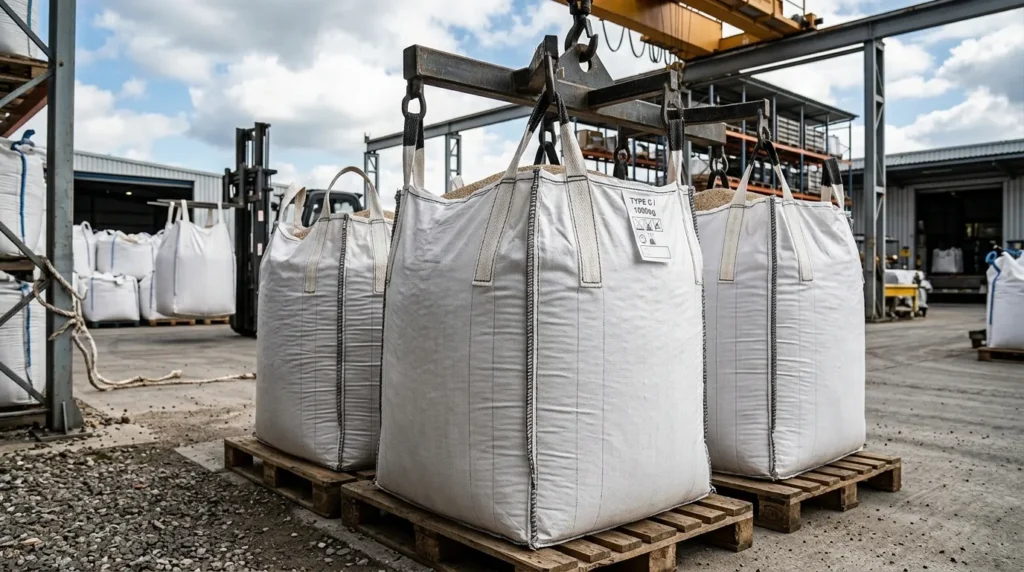
FIBC stands for Flexible Intermediate Bulk Container. You may also hear it called a jumbo bag, big bag or bulk bag. It is a large woven polypropylene (PP) bag with lifting loops, built to be moved by forklift or crane. Most standard FIBCs carry between 500 kg and 2,000 kg, and custom builds can go higher. Wikipedia has a good overview of the format.
You’ll find FIBCs in agriculture, chemicals, cement, minerals, fertilizers, animal feed and food processing. Browse our range of FIBC jumbo bags.
What Counts as a “Regular Bag”?
When buyers say regular bags, they usually mean small PP woven sacks, laminated bags, or paper and jute sacks. These typically hold 5 kg to 50 kg and are filled, stacked and carried by hand or on pallets. They suit retail packs and small-batch distribution.
FIBC Bags vs Regular Bags: Side-by-Side
|
Factor |
FIBC (Jumbo) Bags |
Regular Bags |
|
Typical capacity |
500 kg – 2,000 kg+ |
5 kg – 50 kg |
|
Handling |
Forklift, crane or hoist |
Manual or pallet stacking |
|
Labour needed |
Low |
High |
|
Cost per tonne of packaging |
Usually lower at volume |
Usually higher at volume |
|
Reusable |
Multi-trip versions available |
Mostly single use |
|
Best for |
Bulk commodities, industrial shipping |
Retail, small orders, easy handling |
|
Container loading |
Fewer units, faster |
Many units, slower |
|
Custom options |
Liners, baffles, spouts, anti-static |
Printing, laminating, size |
Where FIBC Bags Win
- Lower handling cost. One jumbo bag replaces 20 to 40 small sacks. That means fewer lifts, fewer workers and less time at the dock.
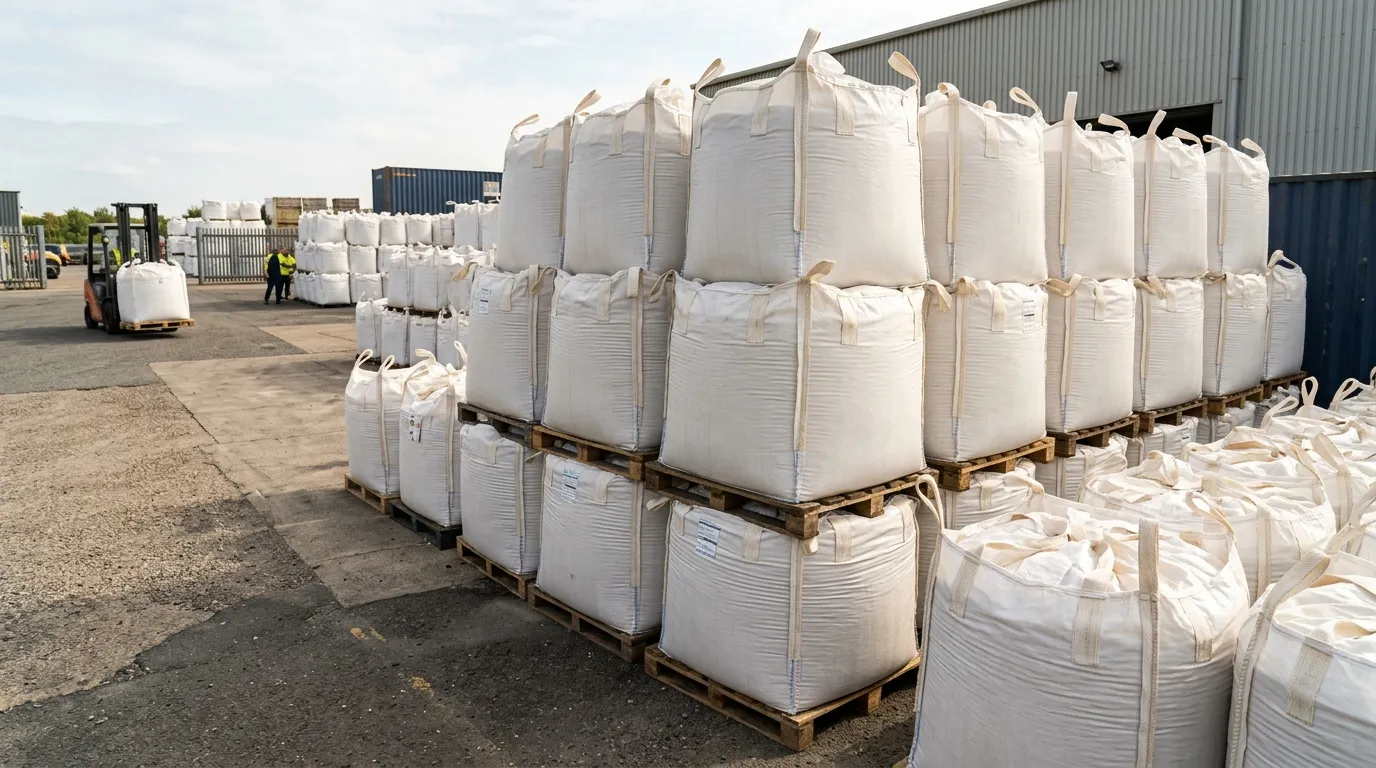
- Better for export shipping. Fewer, larger units are quicker to load and easier to count. A 40-foot container can be loaded in a well-planned pattern, and the bags can be palletised or sling-lifted at the port.
- Safer for hazardous or sensitive materials. FIBCs are available in electrostatic Types A, B, C and D for flammable powders and solvent-rich environments. UN-certified versions exist for dangerous goods transport.
- Food and pharma options. Food-grade FIBCs use clean fabric, liners and controlled production. This protects products like sugar, flour, starch and pharma powders.
- Strong and reusable. Bags are rated with a safety factor. Single-use bags are typically built to 5:1 and multi-trip bags to 6:1, as set out in ISO 21898. That means a 1,000 kg bag is tested well beyond its working load.
Where Regular Bags Still Make Sense
Jumbo bags aren’t always the answer. Regular bags are the better pick when:
- You sell directly to consumers or small shops
- Your customers can’t handle forklifts or heavy loads
- You need branded retail packs with high-quality printing
- Your order volumes are small and storage space is limited
- Your product needs portion-sized units
If you ship 20 tonnes a month of grain or chemicals, FIBCs will almost always save you money. If you sell 2 kg packs of spices, they won’t.
How to Decide: A Quick Checklist
Ask yourself these five questions:
- How much do I ship per order? Above a few tonnes, FIBCs usually pay off.
- Do I have forklift or crane access at both ends? If not, regular bags are safer.
- Is my product dusty, flammable or food-grade? If yes, you need the right FIBC type or liner.
- Will the bag be reused? Multi-trip FIBCs lower your long-term cost.
- Where is it going? Overseas routes favour bulk units that load fast and stack well.
Why Buy FIBC Bags from India?
India is one of the world’s major FIBC producers, with strong clusters in Gujarat and other manufacturing hubs. Buyers in Europe, the UK, the Middle East, Africa and North America source from Indian exporters for a few practical reasons:
- Competitive pricing without giving up strength or finish
- Customisation in size, loops, spouts, liners, printing and fabric weight
- Experience with export paperwork and international packing standards
- Flexible order sizes from trial lots to full containers
Indian FIBC makers follow standards such as IS 15509 from the Bureau of Indian Standards, and many also build to ISO 21898 and customer-specific specs. Always ask for test reports before placing a large order.
What to Ask Your Supplier Before You Order
Before you commit, get clear answers on these points:
- Safe working load (SWL) and safety factor
- Fabric weight (GSM) and UV treatment
- Bag type: A, B, C or D, if static is a concern
- Liner type and thickness
- Loop style: cross-corner, 4-loop, 2-loop or tunnel loop
- Minimum order quantity and lead time
- Test certificates and sample availability
- Packing method and container loading plan
Want help choosing a spec? Contact our team with your product, weight and destination, and we’ll recommend a bag.
Common Mistakes Buyers Make
Buying on price alone. A cheaper bag with a lower safety factor can split in transit and cost you the whole load.
Ignoring the product’s properties. Fine powders need sift-proof seams. Flammable dust needs the right antistatic type. Moisture-sensitive goods need a liner.
Skipping samples. Test a sample with your real product and your real handling process before ordering in bulk.
Forgetting the destination. Check the customer’s unloading setup, port handling and any country-specific regulations.
FAQs
What does FIBC stand for?
Flexible Intermediate Bulk Container. It’s also called a jumbo bag, big bag or bulk bag.
How much can an FIBC bag hold?
Standard bags carry 500 kg to 2,000 kg. Custom designs can carry more.
Are FIBC bags cheaper than regular bags?
Per tonne of product, they usually are at higher volumes, because they cut handling and labour costs.
Can FIBC bags be used for food?
Yes. Food-grade FIBCs are made with suitable fabric and liners to meet food safety requirements.
Are FIBC bags reusable?
Multi-trip bags are made for repeated use. Single-use bags should be used once.
Can I buy FIBC bags directly from India?
Yes. Many Indian manufacturers export worldwide and offer samples, custom specs and container-load orders.
Final Verdict
Choose FIBC bags if you move large volumes, ship internationally, or need strong, reusable and customisable packaging. Choose regular bags if you serve retail customers, have small order sizes, or lack heavy handling equipment. Many businesses use both: jumbo bags for bulk shipping and small sacks for retail repacking.
If you’re still unsure, send us your product details and we’ll suggest the most cost-effective option. Request a quote from Handmada