A flooring material has to do more than complete the look of a room. It needs to suit the way the space is used, withstand everyday activity, remain practical to maintain, and work with the overall interior design.
This is where SPC flooring has gained attention across residential, commercial, retail, and hospitality projects. Its combination of rigid construction, moisture-resistant performance, realistic surface designs, and installation convenience makes it suitable for interiors where both appearance and everyday practicality matter.
But the value of SPC flooring is not limited to its construction. The choice of plank format, surface finish, wear protection, color, edge detail, and application can significantly influence the final result.
Let’s look at the key SPC flooring benefits, features, and applications and understand why it is being considered for different types of interior projects.
Why Is SPC Flooring Becoming Popular?
Flooring preferences have changed as interior projects have become more focused on combining design with practical performance.
Natural wood can provide an attractive appearance, but project requirements such as moisture exposure, maintenance, installation time, and consistency can influence material selection.
SPC flooring offers an alternative approach. It can recreate the visual character of wood while providing a manufactured flooring system designed for everyday interior use.
For homeowners, designers, contractors, and flooring importers, this creates flexibility in selecting a floor that matches both the visual concept and functional requirements of a project.
Key Benefits of SPC Flooring
Water-Resistant Performance for Everyday Interiors
Moisture is an important consideration when selecting flooring.
SPC flooring is commonly chosen for its water-resistant core, making it suitable for many interior areas where occasional moisture can be present.
This makes it a practical option for spaces such as kitchens, apartments, offices, retail stores, and other suitable interiors.
Water resistance does not mean that installation details can be ignored. Proper joints, subfloor preparation, perimeter finishing, and site conditions remain important.
A Practical Choice for High-Activity Spaces
Different interiors experience different levels of foot traffic.
A family home may experience continuous daily movement, while a retail store or café may have significantly more activity. SPC flooring can be specified according to the requirements of the intended application.
The wear layer is particularly important when evaluating flooring for areas with regular foot traffic. Buyers should match the product specification to the expected use rather than selecting a product based only on appearance.
Consistent Wood-Inspired Appearance
One advantage of manufactured flooring is design consistency.
SPC flooring can be produced in coordinated colors and patterns, allowing larger projects to maintain a consistent visual language across different rooms or locations.
Wood-inspired surfaces can bring warmth to modern interiors without requiring natural timber flooring throughout the project.
Faster Flooring Installation
Time is an important factor in both renovation and commercial construction.
Many SPC flooring products use click-lock installation, allowing planks to connect through an interlocking system. This can simplify the installation process and help projects move forward efficiently.
The actual installation method depends on the product, so installers should always follow the relevant manufacturer’s instructions.
Straightforward Routine Care
Flooring in busy environments needs regular cleaning.
SPC flooring can generally be maintained through routine sweeping, vacuuming, and suitable damp cleaning. Spills can also be cleaned promptly as part of normal maintenance.
Using appropriate cleaning methods and avoiding excessive standing water can help preserve the floor’s appearance.
Design Flexibility
SPC flooring is available in different colors, plank proportions, patterns, and edge treatments.
This means the same flooring category can be adapted to very different interior styles.
A large plank can create a calm, spacious appearance, while a herringbone layout can introduce more visual movement and character.
Important SPC Flooring Features
The benefits of SPC flooring are closely connected to the product features selected for a particular project.
Rigid Core Construction
The rigid core gives SPC flooring its characteristic firm structure.
This makes it different from flexible flooring products and contributes to the stable feel of the installed floor.
Wear Protection
The wear layer is an important consideration for any flooring project.
It helps protect the decorative surface from everyday use. When selecting SPC flooring for commercial projects, buyers should pay close attention to the wear-layer specification and expected traffic conditions.
Surface Design
The visible surface has a major influence on the final appearance of an interior.
SPC flooring can feature wood-inspired patterns and tones designed to create a natural flooring effect while maintaining consistent manufacturing.
Click-Lock Installation
A click-lock system allows individual planks to connect with one another.
This can make installation more convenient and is particularly useful for projects where flooring needs to be installed efficiently.
Bevel Edge Details
The edge profile can change the appearance of individual planks after installation.
Micro bevel provides a subtle plank separation, while painted bevel can create a stronger edge definition and shadow-line effect.
These details may seem small, but they can make a noticeable difference to the finished floor.
Choosing the Right SPC Flooring Design
The appearance of the floor should complement the architecture and furniture rather than being considered separately.
Light SPC Flooring
Light shades can help create a brighter visual environment and can work particularly well with minimalist and contemporary interiors.
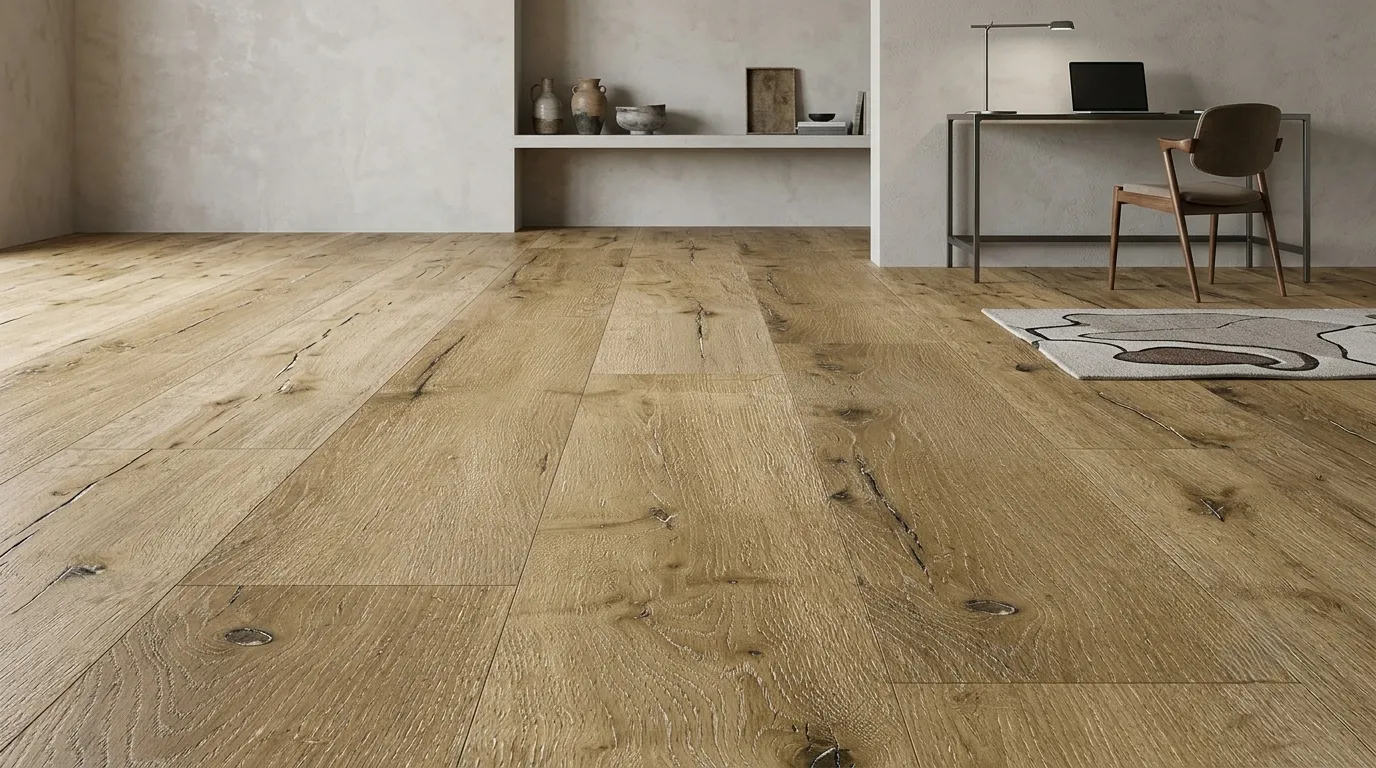
Medium Wood Tones
Warm shades such as honey, golden, brown, and coco can introduce a more traditional or comfortable character to living and hospitality spaces.
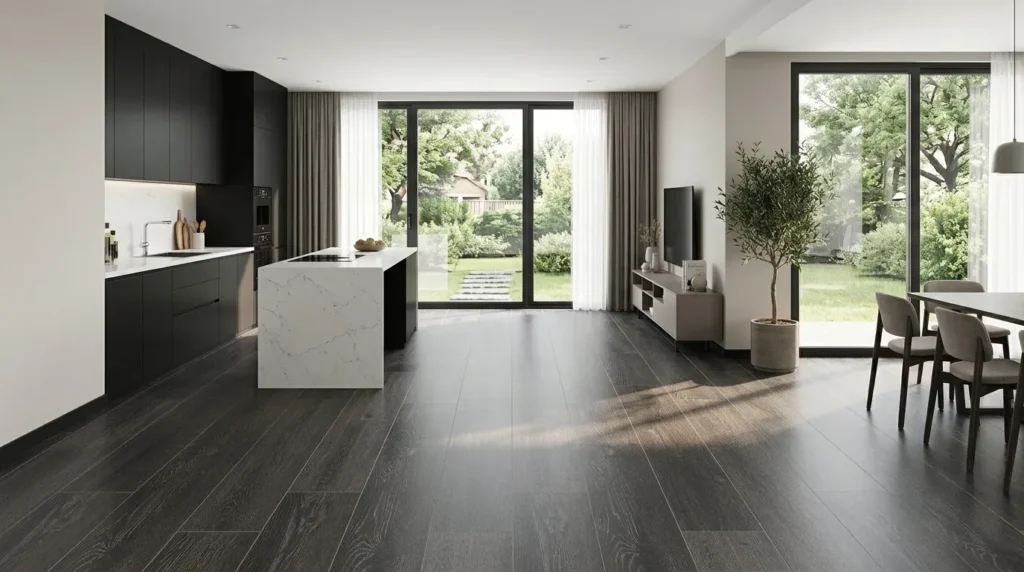
Dark SPC Flooring
Ebony, carbon, black, and deeper wood tones can create contrast and a more dramatic appearance.
They can work effectively in modern commercial interiors when balanced with appropriate lighting and wall colors.
Patterned Flooring
For spaces that need more visual character, patterned formats such as herringbone can turn the floor into a stronger design feature.
Applications of SPC Flooring
The versatility of SPC flooring allows it to be considered for many different interior environments.
Homes and Apartments
Residential flooring needs to balance appearance with everyday practicality.
SPC flooring can be used in living rooms, bedrooms, kitchens, hallways, and apartment interiors where a wood-inspired appearance and easy routine maintenance are desired.
Office Interiors
Offices often require a clean, professional appearance that can withstand regular movement.
SPC flooring can be used in workspaces, meeting rooms, reception areas, and other suitable office environments.
Retail and Showroom Spaces
In retail environments, flooring contributes to the customer’s overall impression of the store.
SPC flooring allows retailers to select colors and formats that complement product displays, furniture, lighting, and brand aesthetics.
Its practical characteristics can also make it suitable for areas experiencing regular customer movement.
Restaurants and Cafés
The flooring in a café or restaurant needs to fit the atmosphere while remaining practical for regular cleaning.
Wood-inspired SPC flooring can help create warm, contemporary, or refined interiors depending on the selected color and layout.
Product selection should take the site’s specific conditions and traffic requirements into account.
Hospitality Interiors
Hotels, serviced apartments, and other hospitality environments often use flooring to create a consistent visual experience.
SPC flooring can be considered for selected guest and common areas where design consistency, maintenance, and everyday performance are important.
Clinics and Professional Spaces
Professional interiors often benefit from flooring with a clean and consistent appearance.
SPC flooring can be considered for suitable clinic and professional environments where the product’s specifications meet the project’s requirements.
SPC Flooring for Different Interior Requirements
Not every flooring project has the same priorities.
For a residential renovation, installation convenience and appearance may be particularly important.
For a retail project, traffic resistance, maintenance, and visual consistency may receive greater attention.
For a hospitality project, design, durability, cleaning requirements, and supply consistency may all influence the decision.
This is why SPC flooring should be selected according to the application rather than simply the appearance of the plank.
Before placing an order, buyers should review:
- Expected foot traffic
- Required wear layer
- Plank dimensions
- Overall thickness
- Surface design
- Bevel option
- Installation system
- Underlayment specification
- Color requirements
- Packaging requirements
- Project quantity
SPC Flooring for Global Interior Projects
For international buyers, flooring selection involves more than choosing a design from a catalogue.
Importers and distributors may need consistent specifications, coordinated colors, suitable packing, samples, documentation, quantity planning, and reliable communication throughout the order process.
Handmada supplies SPC flooring for global buyers across residential, commercial, retail, and hospitality applications.
The collection includes different plank formats and design options, including:
- 181 × 1200mm SPC flooring
- 228 × 1524mm SPC flooring
- 150 × 600mm herringbone SPC flooring
- Multiple wood-inspired colors
- Micro bevel and painted bevel options
- Click-lock flooring options
- Product specification support
- Sample support on request
- Export-oriented coordination
For product details and available options, visit the Handmada SPC Flooring collection.
How to Select SPC Flooring for a Project
A good flooring decision starts with the project rather than the product catalogue.
Step 1: Identify the Application
Determine whether the flooring will be used in a home, office, retail store, café, hospitality space, or another environment.
Step 2: Understand the Traffic
Consider how many people will use the space and how frequently the floor will experience foot traffic.
Step 3: Select the Appropriate Specification
Compare thickness, wear layer, surface finish, core construction, and installation system according to the application.
Step 4: Choose the Visual Style
Consider plank size, color, wood pattern, bevel detail, and installation pattern.
Step 5: Confirm Project Requirements
For larger projects, confirm samples, quantity, packing, documentation, lead time, and other supply requirements before finalizing the order.
Frequently Asked Questions
What are the main benefits of SPC flooring?
The key benefits include water-resistant performance, rigid construction, convenient installation, realistic wood-inspired designs, practical maintenance, and flexibility across different interior applications.
Is SPC flooring suitable for residential use?
Yes. SPC flooring can be used in apartments, houses, bedrooms, living rooms, kitchens, and other suitable residential interiors.
Can SPC flooring be used in commercial projects?
Yes. SPC flooring can be considered for offices, retail stores, cafés, restaurants, clinics, and hospitality environments. The product specification should be selected according to the expected traffic and conditions.
What makes SPC flooring suitable for retail spaces?
Its combination of design flexibility, practical surface performance, and maintenance convenience can make SPC flooring suitable for retail environments. The wear-layer specification should be considered based on expected foot traffic.
Does SPC flooring require complicated maintenance?
Routine maintenance is generally straightforward. Regular sweeping or vacuuming and suitable damp cleaning can help maintain the flooring. Product-specific cleaning recommendations should always be followed.
What colors are available in SPC flooring?
SPC flooring can be produced in a wide range of shades. Handmada’s collection includes colors such as White, Ebony, Honey, Ash, Golden, Wenge, Brown, Coco, Grey, Carbon, and Black, depending on product availability.
What is the purpose of a bevel edge?
A bevel defines the edges of individual planks. Micro bevel provides a subtle separation, while painted bevel creates a more pronounced edge and shadow effect.
Is herringbone SPC flooring suitable for modern interiors?
Yes. Herringbone SPC flooring can work in modern, classic, boutique, hospitality, and other design-focused interiors where a patterned floor is desired.
Conclusion
The appeal of SPC flooring comes from the way its practical characteristics and design possibilities work together.
Its water-resistant performance, rigid construction, wear protection, installation convenience, and range of visual options make it adaptable to many types of interior projects.
However, the right flooring should always be selected according to the environment in which it will be installed. Traffic level, product specification, design requirements, installation method, and maintenance expectations all play a role in the final choice.
From residential apartments to offices, retail stores, cafés, and hospitality interiors, SPC flooring can provide a flexible flooring option for projects that need both visual appeal and everyday practicality.
Handmada offers SPC flooring in different formats, colors, and edge options for global buyers looking to develop flooring collections for different markets and interior applications.
Explore Handmada’s SPC Flooring to review the available collection and discuss product requirements.
Follow Us On: Instagram | LinkedIn | X (Twitter) | Facebook | YouTube | Pinterest