If you’ve shopped for flooring in the last few years, you’ve seen the claim everywhere: “100% waterproof SPC flooring.” It sounds perfect for kitchens, bathrooms, and basements. But is it the full story?
Short answer: yes, SPC flooring is waterproof, but “waterproof” doesn’t mean “flood-proof.” The difference matters, especially if you’re a distributor, contractor, or homeowner who wants to avoid callbacks and complaints.
At Handmada, we manufacture and export SPC flooring from India to buyers around the world, so we get this question daily. Here’s an honest breakdown.
What Is SPC Flooring?
SPC stands for Stone Plastic Composite (some call it Stone Polymer Composite). It’s a rigid-core vinyl plank made of limestone powder, PVC, and stabilizers, pressed into a dense, hard board.
A typical SPC plank has these layers:
- UV coating: protects against scratches and stains
- Wear layer: usually 0.3 mm to 0.55 mm, which determines durability
- Decorative print film: the wood, stone, or tile look
- SPC core: the rigid, waterproof backbone
- Underlay (optional): IXPE or EVA foam for comfort and sound reduction
The core is what makes SPC special. It’s made largely of mineral powder and plastic, so there’s nothing in it that absorbs water.
So, Is SPC Flooring Waterproof?
Yes. The SPC core doesn’t swell, warp, rot, or delaminate when it gets wet, unlike solid wood, MDF-based laminate, or engineered wood. You can spill a drink, mop the floor, or have a leaking dishwasher, and the planks themselves won’t be damaged.
That’s why SPC waterproof flooring is so popular in:
- Kitchens
- Bathrooms and laundry rooms
- Basements
- Restaurants, cafés, and retail stores
- Hotels and rental properties
What “Waterproof” Does Not Mean
This is where many sellers oversimplify, and where problems start.
- Water can still get underneath. The planks are waterproof, but the seams are not sealed. If water sits for hours (a burst pipe, a long-term leak), it can seep through the click-lock joints into the subfloor. Trapped moisture can then cause mold or damage to the subfloor.
- Subfloor moisture still matters. Concrete slabs can release moisture vapor over time. Good installations use a moisture barrier or a tested, dry subfloor.
- It’s not designed to be submerged. SPC is fine for everyday spills and splashes, not standing water. In a real flood, the floor should be lifted and dried.
- Wall edges need care. Leave the expansion gap (usually 8 to 10 mm) and cover it with skirting or trim. In wet areas, a bead of silicone at the edges adds protection.
Being upfront about these limits builds trust with your customers and cuts down on warranty disputes.
SPC vs WPC vs Laminate: Water Resistance Compared
Feature | SPC | WPC | Laminate | Hardwood |
Core material | Limestone + PVC | Wood/foam + PVC | HDF/MDF board | Natural wood |
Water performance | Excellent | Very good | Poor to moderate | Poor |
Dimensional stability | Excellent | Good | Moderate | Low |
Feel underfoot | Firm | Softer, warmer | Firm | Natural |
Dent resistance | High | Moderate | Moderate | Moderate |
Best for | Wet areas, commercial | Comfort-focused homes | Dry rooms | Dry, premium spaces |
Why SPC Handles Water and Temperature Better
Because the core is so dense, SPC is also very dimensionally stable. It expands and contracts far less than other flooring when temperatures change. That makes it a good choice for:
- Homes with large sun-facing windows
- Heated or air-conditioned commercial spaces
- Hot climates such as the Middle East, Australia, and parts of the USA
It also resists dents from furniture and heavy foot traffic, which is why many commercial buyers prefer it.
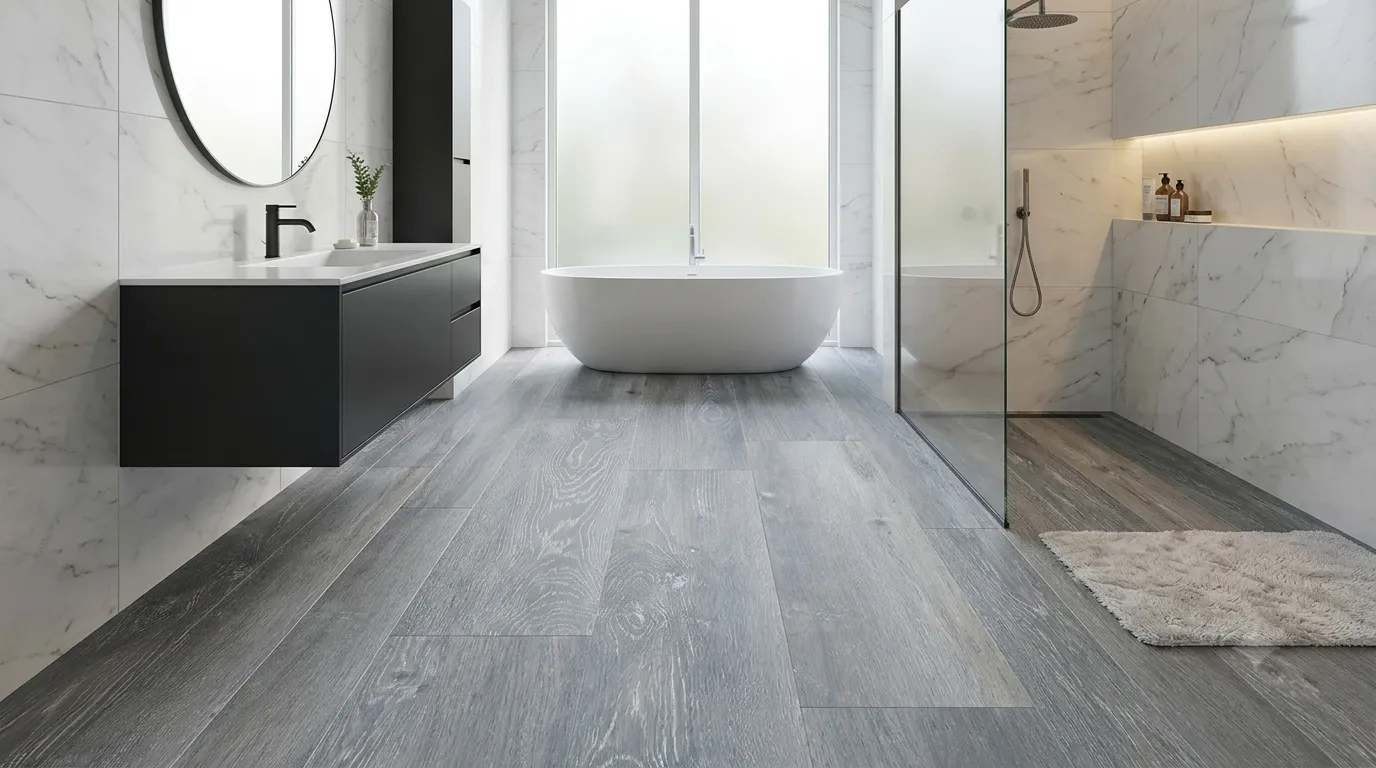
Is SPC Flooring Safe for Bathrooms?
Yes, with proper installation. For bathrooms:
- Choose a plank with a wear layer of at least 0.5 mm
- Pick a textured or embossed-in-register (EIR) finish for better slip resistance
- Seal the perimeter and any plumbing penetrations with silicone
- Don’t install it under fixed fixtures like a bathtub or vanity base; install around them
Most importers also ask whether SPC is safe for indoor air quality. Look for suppliers who test to recognized standards. Reputable third-party programs such as FloorScore certify low VOC emissions, and the EPA’s indoor air quality resources explain why this matters.
What to Look for When Buying SPC Waterproof Flooring
Not all SPC is the same. Two planks can look identical and perform very differently. Check these before you order:
Core density and thickness. Common thicknesses range from 4 mm to 8 mm. Higher-density cores resist indentation and deformation better.
Wear layer thickness. 0.3 mm is fine for light residential use; 0.5 mm or more is better for commercial and high-traffic areas.
Virgin vs recycled material. Virgin PVC and quality limestone give more consistent, stronger planks. Excess recycled content can cause brittleness and odor.
Click-lock quality. Poor locking systems are the #1 reason water gets through. Ask for sample joints and check the fit.
Testing and certifications. Ask for test reports aligned with recognized standards from bodies like ASTM International, plus VOC, fire, and formaldehyde compliance for your target market (REACH in Europe, CARB/FloorScore in the USA, etc.).
Packaging and logistics. For export, plank protection, carton strength, and container-loading expertise matter. Damaged cartons mean damaged profits.
Why Source SPC Flooring from India?
India has quickly become a serious option for international flooring buyers, and Handmada is part of that shift. Buyers outside India choose us for:
- Competitive factory-direct pricing without trading-company markups
- Flexible customization: your own designs, sizes, thicknesses, and private-label packaging
- Consistent quality control from raw material to loading
- Reliable export handling for FOB, CIF, and door-delivery shipments
- Lower minimum order quantities than many large-scale competitors
If you’re planning a bulk order contact our team for samples and a quotation.
How to Keep SPC Flooring Waterproof for Years
A few simple habits will keep it performing for decades:
- Wipe up spills when they happen, even though the floor can handle them.
- Use a damp mop, not a soaking-wet one.
- Use felt pads under furniture.
- Avoid harsh chemicals and steam mops, since high heat can affect locking joints and finishes.
- Fix leaks quickly instead of letting water sit.
Frequently Asked Questions
Is SPC flooring 100% waterproof?
The planks are 100% waterproof, but the seams and edges can let water through if it sits for a long time. Proper installation and quick cleanup solve this.
Can SPC flooring be used in bathrooms?
Yes. Choose a thicker wear layer and a textured surface, and seal the edges with silicone.
Is SPC better than WPC for water resistance?
Generally yes. SPC’s mineral core is denser and more stable. WPC feels softer underfoot but is slightly less rigid.
Can SPC flooring go over concrete?
Yes, if the slab is flat, clean, and dry. A moisture barrier is recommended for slabs with high moisture readings.
Does SPC flooring work in hot climates?
Yes. Its stability makes it a strong choice for warm regions, though direct, prolonged sunlight through large windows should be managed with blinds or UV film.
Does Handmada export SPC flooring internationally?
Yes. We ship from India to buyers worldwide, with custom designs, private labeling, and flexible order sizes.
Final Thoughts
So, is SPC flooring waterproof? Yes. The planks themselves won’t absorb water, swell, or warp, which makes SPC one of the most dependable options for kitchens, bathrooms, basements, and commercial spaces. But it works best when you choose a quality product, install it on a dry, prepared subfloor, and avoid prolonged standing water.
For importers, distributors, and contractors, the real advantage is choosing the right manufacturing partner. Ready to see samples, pricing, or custom options? Get in touch with Handmada and we’ll help you find the right SPC waterproof flooring for your market.