If you are sourcing high-temperature insulation, choosing the right ceramic fiber exporter from India can reduce your costs without lowering quality. India has become a dependable source of refractory insulation for furnaces, kilns, boilers and petrochemical plants worldwide.
This guide covers what ceramic fiber is, the grades and forms available, the specifications to check, the export documents involved, and how to pick a supplier you can trust.
What Is Ceramic Fiber?
Ceramic fiber (also called refractory ceramic fiber or RCF) is a lightweight insulation material made from alumina and silica. It is produced by melting the raw materials and spinning or blowing the melt into fine fibers.
Its main properties are:
- Low thermal conductivity, which saves energy
- High temperature resistance, typically 1,000°C to 1,430°C depending on grade
- Light weight compared to insulating bricks
- Good thermal shock resistance, so it tolerates fast heating and cooling
- Easy installation and cutting on site
Because of these properties, ceramic fiber is widely used wherever heat must be contained efficiently. You can see our full range on the ceramic fiber product page.
Why Import Ceramic Fiber from India?
India’s industrial base supports a strong insulation and refractory sector. Buyers in the Middle East, Africa, Europe, the USA and Southeast Asia source from India for several reasons:
- Competitive pricing: lower manufacturing and labor costs, with a good price-to-quality ratio.
- Wide product range: blankets, boards, paper, modules, bulk fiber and vacuum-formed shapes from one source.
- Customization: thickness, density, size and packaging can be made to order.
- Established export infrastructure: major ports such as Mundra, Nhava Sheva (JNPT) and Kandla handle bulk industrial cargo efficiently.
- Scalable capacity: suppliers can serve trial orders and regular container shipments.
If you want a broader view of why Indian products keep gaining global demand, read our article on high-demand export products driving global trade.
Types of Ceramic Fiber Products an Indian Exporter Can Supply
1. Ceramic Fiber Blanket
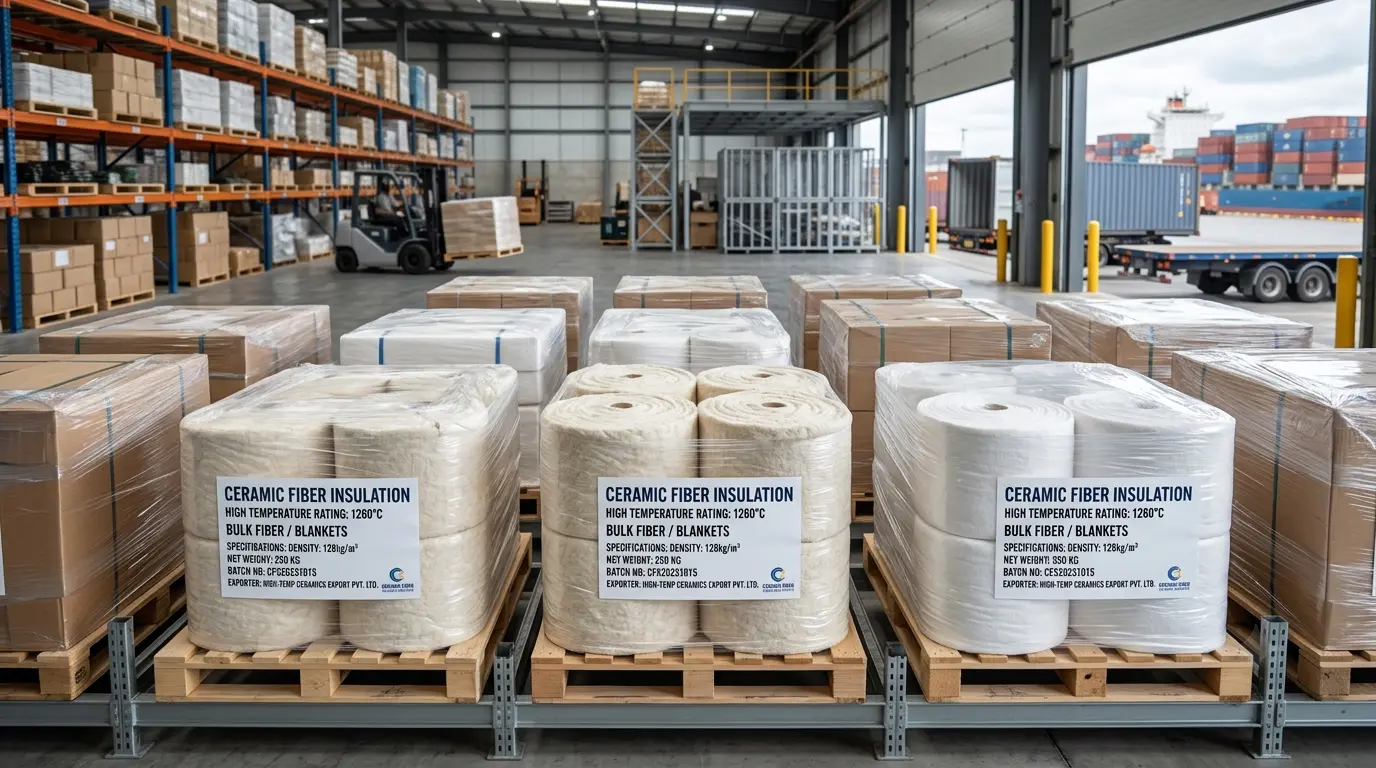
The most common product. It is flexible and needle-punched, and used for furnace linings, pipe wrapping and expansion joints. Typical densities are 64, 96 and 128 kg/m³, and thicknesses range from about 6 mm to 50 mm.
2. Ceramic Fiber Board
A rigid, pressed board used for hot-face linings and backup insulation. It offers good compressive strength.
3. Ceramic Fiber Paper
A thin, flexible sheet used for gaskets, seals and thermal barriers in electrical and industrial equipment.
4. Ceramic Fiber Modules
Pre-compressed folded blanket blocks used to line large furnaces quickly. They cut installation time significantly.
5. Bulk Fiber and Textiles
Loose fiber for castables, plus rope, cloth and tape for sealing and wrapping applications.
Ceramic Fiber Grades and Temperature Ratings
Always match the grade to your operating temperature, not just the maximum rating.
|
Grade |
Classification Temp. |
Typical Use |
|
Standard (STD) |
1,260°C |
General furnaces, boilers, kilns |
|
High Purity (HP) |
1,260°C |
Cleaner chemistry, better stability |
|
High Alumina (HA) |
1,360°C |
Higher-temperature furnace linings |
|
Zirconia-containing (HZ) |
1,400°C to 1,430°C |
Very high temperature applications |
Operating temperature should stay below the classification temperature to ensure long service life. Test methods for these products are commonly based on standards such as ASTM C892, which covers high-temperature fiber blanket insulation.
Key Specifications to Check Before You Order
Ask any ceramic fiber exporter from India for a technical data sheet (TDS) covering:
- Classification temperature (°C)
- Bulk density (kg/m³)
- Thermal conductivity at stated mean temperatures
- Tensile strength
- Shrinkage after heating (a low figure means better quality)
- Chemical composition (Al₂O₃, SiO₂, and Fe₂O₃ and other impurities)
- Dimensions and tolerances (width, length, thickness)
A reliable supplier shares this data openly and can supply test reports with shipments.
Industries That Use Ceramic Fiber
- Steel and metal processing
- Petrochemical and refineries
- Power generation and boilers
- Cement and glass manufacturing
- Ceramics and heat treatment furnaces
- Automotive and aerospace heat shielding
- Fire protection and passive fire insulation
How to Choose a Reliable Ceramic Fiber Exporter from India
Not every supplier is equal. Use this checklist:
- Manufacturing capability: confirm whether they manufacture or only trade. Ask for factory details and photos or videos.
- Quality certifications: look for ISO 9001 and ask about third-party testing.
- Product consistency: request samples and compare them against the data sheet.
- Export experience: a good exporter handles documentation, packing and shipping without errors.
- Customization: the ability to modify density, size and packing to your needs.
- Clear communication: quick responses and transparent quotations.
- Payment and delivery terms: clear Incoterms (FOB, CIF, CFR) and realistic lead times.
- References: past export markets or client feedback.
You can learn more about our company on the About Us page, and see the other products we export on our products page.
Export Documentation for Ceramic Fiber from India
A professional exporter prepares the following documents:
- Commercial invoice
- Packing list
- Bill of lading or airway bill
- Certificate of Origin
- Material Safety Data Sheet (MSDS/SDS)
- Test certificate or quality report (on request)
- Fumigation or heat-treatment certificate for wooden packaging (where required)
Ceramic fiber is generally classified under HS code heading 6806 (mineral wools and heat-insulating materials), but the exact 8-digit code can vary by product form. Confirm it with your customs broker before shipping. For India’s export rules and policy updates, refer to the DGFT (Directorate General of Foreign Trade).
Packing and Shipping
Ceramic fiber blanket is usually supplied in rolls packed in polybags and then in cartons or on pallets, which protects it from moisture and handling damage. Boards and modules are packed in cartons or wooden crates.
Cargo ships in 20 ft or 40 ft containers by sea, and smaller or urgent orders can go by air. Because the product is lightweight, container volume is usually the limiting factor rather than weight, so efficient packing directly affects your freight cost per unit.
Safety and Handling Notes
Ceramic fiber should be handled with basic precautions: gloves, long sleeves, eye protection and a suitable dust mask during cutting and installation. Follow the supplier’s SDS and local workplace regulations. Regulatory treatment of refractory ceramic fibers varies by country, so check the rules in your market (for example, the European Chemicals Agency (ECHA) provides guidance for EU buyers).
Factors That Affect Ceramic Fiber Export Price
- Grade and classification temperature
- Density and thickness
- Order quantity (MOQ and volume discounts)
- Raw material and energy costs
- Packing type and customization
- Freight, insurance and Incoterms
- Destination country duties and taxes
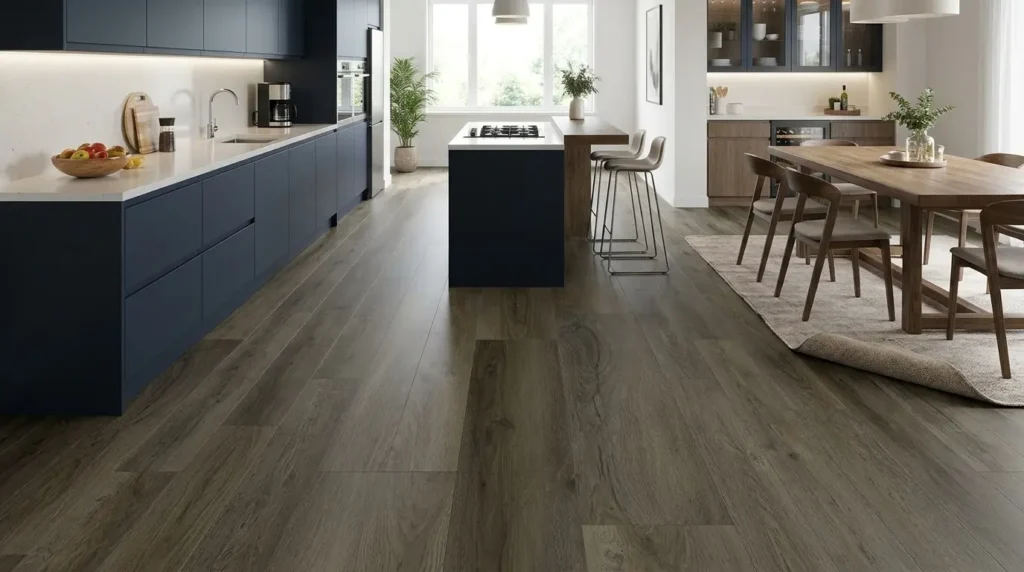
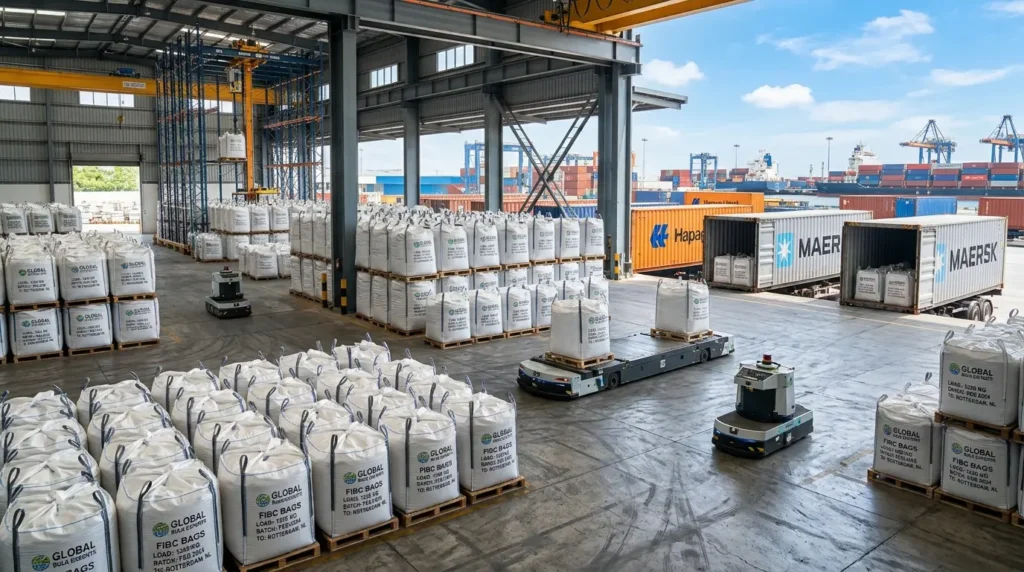
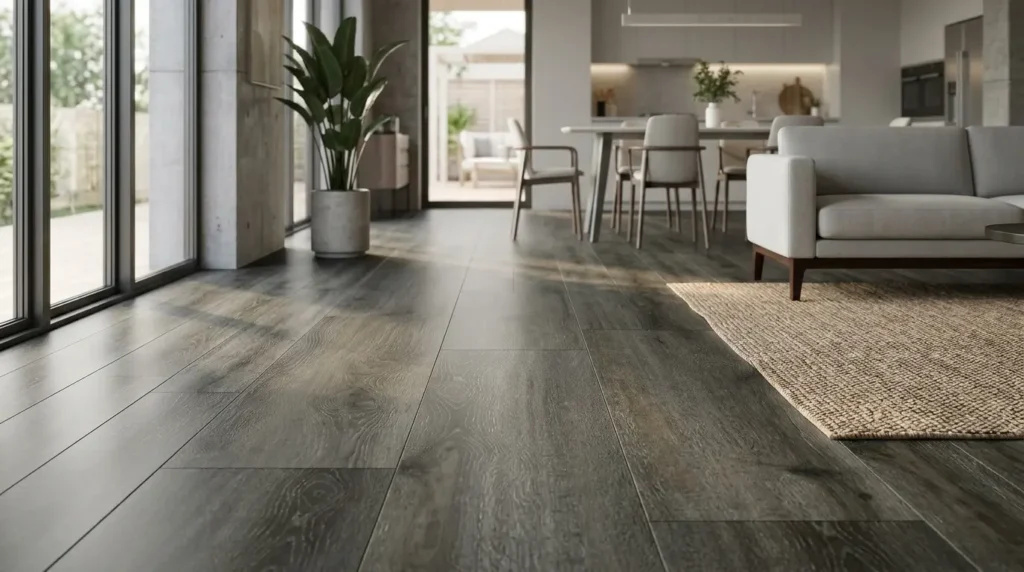
Ordering several products from one exporter can reduce overall logistics cost. Handmada also exports FIBC bags and SPC flooring, so you can consolidate shipments.
Why Work with Handmada?
Handmada is an India-based exporter supplying industrial products to global buyers. For ceramic fiber, we offer:
- Custom sizes, densities and packing
- Technical data sheets and quality support
- Documentation support and reliable shipping
- Responsive pre-sale and after-sales communication
To see how we work as a supplier, read our guide to ceramic fiber supplier from India.
Frequently Asked Questions
Which is the best ceramic fiber exporter from India?
The best exporter is the one that manufactures to consistent specifications, provides test data, supports export documentation and communicates clearly. Compare samples, certifications and references before deciding.
What is the maximum temperature of ceramic fiber?
Standard grades are rated to about 1,260°C. High-alumina and zirconia-containing grades can reach 1,360°C to 1,430°C. Always keep operating temperature below the classification temperature.
What is the minimum order quantity for ceramic fiber export?
MOQ depends on the product and supplier. Many exporters accept trial or mixed orders, and container-load orders get the best pricing. Contact us for the current MOQ.
Can I get a sample before placing a bulk order?
Yes. Reputable exporters provide samples so you can verify density, size and quality before ordering in volume.
Which countries import ceramic fiber from India?
Indian ceramic fiber is exported to markets across the Middle East, Africa, Europe, North America and Southeast Asia, wherever steel, petrochemical, power and ceramics industries operate.
How long does shipping take?
Production and dispatch usually take a few weeks for standard orders, plus sea transit that varies by destination. Ask your supplier for a confirmed lead time with the quotation.
Conclusion
Choosing the right ceramic fiber exporter from India comes down to product quality, technical transparency, export experience and dependable service. Verify grades and specifications, request samples, and confirm documentation before placing a large order.
Ready to import ceramic fiber from India? Contact Handmada with your grade, size and quantity requirements, and our team will send a detailed quotation.