Picking the wrong insulation for a high-temperature application is expensive. Linings shrink, crack and fail early, energy bills rise, and in the worst case, shutdowns follow. That is why understanding ceramic fiber insulation temperature ratings is the first step before you buy.
Ceramic fiber is sold in several grades, and the most common are 1260°C, 1400°C and 1600°C. They look similar, but they are made from different raw materials and behave very differently in service. This guide explains what each rating means, how the grades compare, where each one is used and how to choose the right one for your furnace, kiln, boiler or heat-treatment equipment.
If you already know your requirement, you can browse our range of ceramic fiber products directly.
What Does a Ceramic Fiber Temperature Rating Mean?
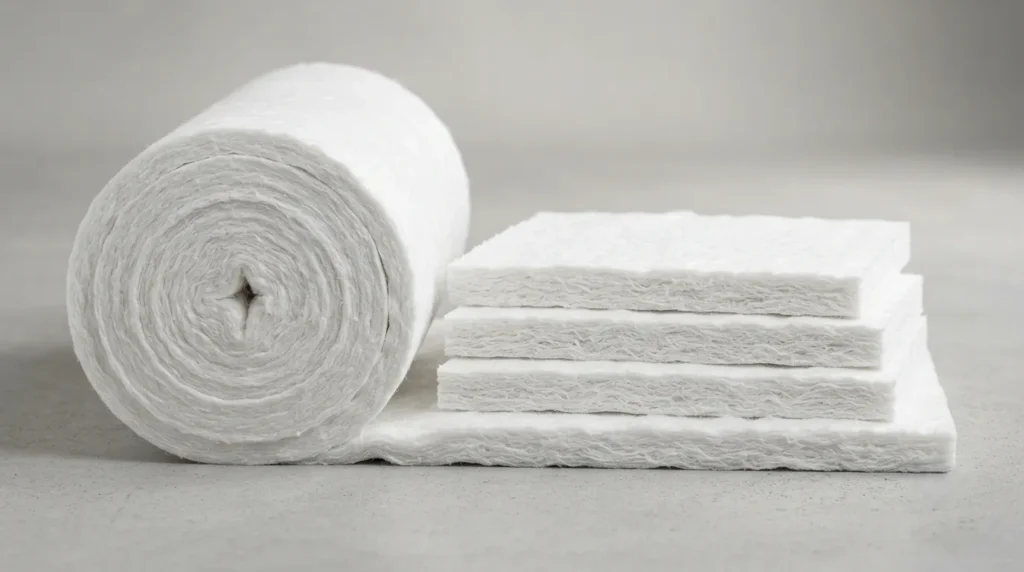
Ceramic fiber insulation, also called refractory ceramic fiber (RCF), is made from alumina and silica, sometimes with added zirconia or higher alumina content. The temperature rating is known as the classification temperature.
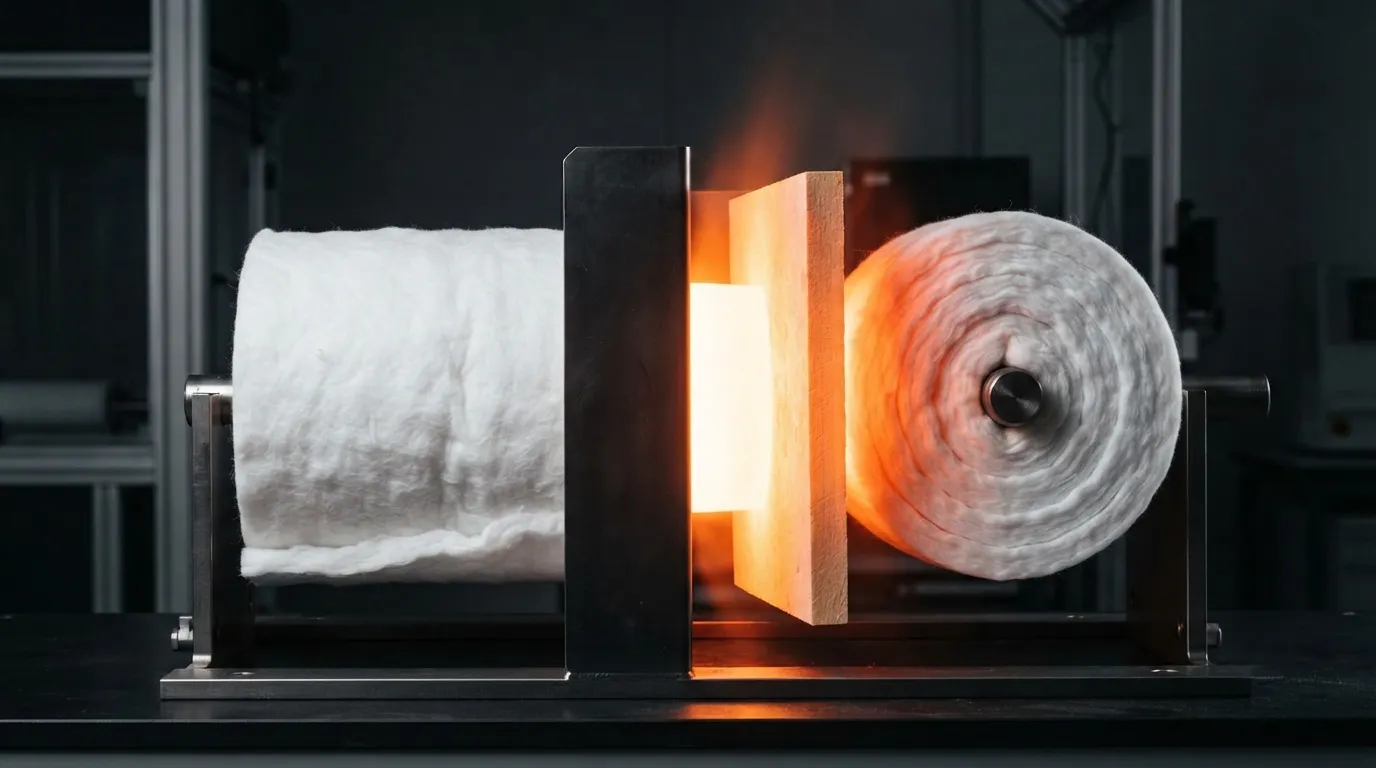
The classification temperature is the maximum temperature at which the material keeps acceptable stability, usually judged by permanent linear shrinkage after a set heating period (commonly 24 hours). It is determined through standardized tests such as those published by ASTM International.
Two points are often misunderstood:
- Classification temperature is not the same as continuous operating temperature. In practice, the recommended continuous use temperature is usually about 100°C to 150°C lower than the rating.
- Higher rating does not mean better for every job. Higher grades cost more and are only needed when your process actually requires it.
Ceramic Fiber Temperature Grades at a Glance
Property | 1260°C Grade (Standard / High Purity) | 1400°C Grade (Zirconia-added) | 1600°C Grade (High Alumina / Polycrystalline) |
Classification temperature | 1260°C | 1400°C | 1600°C |
Typical continuous use | up to about 1100–1150°C | up to about 1250–1300°C | up to about 1450–1500°C |
Main composition | Alumina-silica | Alumina-silica with zirconia | High alumina / mullite |
Relative cost | Low | Medium | High |
Typical use | General furnaces, kilns, boilers | Heat treatment, petrochemical, forging | Specialty high-temperature furnaces |
Values are typical industry ranges and vary by manufacturer and density. Always confirm with the product datasheet.
1260°C Ceramic Fiber: The Industry Standard
The 1260°C grade is the most widely used ceramic fiber insulation. It is made from alumina and silica and offers an excellent balance of thermal performance, flexibility and price.
Key characteristics
- Low thermal conductivity for energy saving
- Light weight and low heat storage, so furnaces heat and cool faster
- Good resistance to thermal shock
- Easy to cut, shape and install
- Most cost-effective option for the majority of applications
Common applications
- Industrial furnace and oven linings
- Kiln insulation
- Boiler and steam line insulation
- Heat treatment furnace backup layers
- Expansion joint packing and gaskets
If your operating temperature stays below roughly 1100°C, 1260°C ceramic fiber is usually the smartest choice.
1400°C Ceramic Fiber: Zirconia-Enhanced Performance
The 1400°C grade adds zirconium oxide (zirconia) to the alumina-silica fiber. Zirconia slows down crystallization of the fiber at high temperatures, which improves shrinkage resistance and durability.
Key characteristics
- Higher temperature stability than 1260°C grades
- Better resistance to shrinkage and fiber embrittlement
- Longer service life in cycling, high-heat conditions
- Good performance in mildly reducing atmospheres
Common applications
- Heat-treatment and annealing furnaces
- Petrochemical reformers and heaters
- Forging and reheating furnaces
- Ceramic and glass industry equipment
- Hot-face linings where 1260°C material would degrade quickly
Choose the 1400°C grade when your process regularly runs above 1150°C or when the 1260°C lining has shown early shrinkage.
1600°C Ceramic Fiber: For Extreme Heat
The 1600°C grade uses high-alumina or polycrystalline mullite fiber with alumina content far above standard grades. These fibers can handle extreme temperatures where aluminosilicate fibers would fail.
Key characteristics
- Highest temperature capability among common ceramic fibers
- Excellent chemical stability and low shrinkage at extreme heat
- Strong resistance to many aggressive atmospheres
- Premium price, so used selectively
Common applications
- Laboratory and research furnaces
- Specialty high-temperature sintering furnaces
- Aerospace and advanced materials processing
- Hot-face linings in extreme-temperature zones only
To control cost, many engineers use 1600°C material only on the hot face and a lower grade as backup layers.
How to Choose the Right Temperature Grade
Follow these five steps before ordering:
- Define the maximum and continuous operating temperature. Include temperature spikes, not just the average.
- Add a safety margin. Select a grade rated at least 100–150°C above your continuous temperature.
- Check the atmosphere. Reducing gases, alkali vapors, steam or chemical fumes can reduce fiber life.
- Consider thermal cycling. Frequent heating and cooling favors higher-quality, more stable grades.
- Balance cost against lifespan. A slightly higher grade often lasts longer and lowers the total cost of ownership.
Use the product form that suits the job, such as blankets, boards, modules, paper or bulk fiber. You can compare available options on our ceramic fiber insulation products page.
Density and Thickness Also Matter
Temperature rating is only part of the picture. Density (commonly 64, 96, 128 or 160 kg/m³ for blankets) and thickness affect strength, heat loss and service life.
- Lower density (64–96 kg/m³): lighter, lower cost, suited to backup layers and general lining.
- Higher density (128–160 kg/m³): better tensile strength, lower shrinkage and better resistance to gas erosion, suited to hot faces and high-velocity zones.
The right combination of grade, density and thickness gives the best thermal efficiency for your system.
Safety and Handling Tips
Ceramic fiber is a proven insulation, but it should be handled correctly.
- Wear a suitable respirator, gloves, long sleeves and eye protection during cutting and installation.
- Minimize dust and clean with a HEPA vacuum, not compressed air.
- Note that after long exposure to high temperatures, ceramic fibers can partially convert to crystalline silica (cristobalite), so used material should be removed with care.
- Follow local regulations and the manufacturer’s safety data sheet. Regulatory bodies such as OSHA provide guidance on dust and fiber exposure.
Common Mistakes to Avoid
- Selecting insulation at the exact maximum temperature with no margin
- Using 1260°C fiber in zones that regularly exceed 1200°C
- Ignoring atmosphere and chemical exposure
- Choosing only on price instead of lifetime cost
- Skipping the datasheet and shrinkage values
Frequently Asked Questions (FAQ)
What is the temperature rating of ceramic fiber insulation?
Ceramic fiber insulation is commonly rated at 1260°C, 1400°C and 1600°C. These are classification temperatures, and continuous use temperature is normally 100–150°C lower.
What is the difference between 1260°C and 1400°C ceramic fiber?
1260°C ceramic fiber is made of alumina and silica. 1400°C ceramic fiber adds zirconia, giving better shrinkage resistance and a longer life at higher temperatures.
Can I use 1260°C ceramic fiber at 1260°C continuously?
It is not recommended. For long service life, the continuous operating temperature should stay about 100–150°C below the classification temperature.
When should I use 1600°C ceramic fiber?
Use it for extreme-temperature furnaces, such as specialty sintering and laboratory equipment, where lower-grade fibers would shrink or degrade.
Is ceramic fiber safe to use?
Yes, when handled with proper protective equipment and dust control. Always follow the safety data sheet and local regulations.
Where can I buy ceramic fiber insulation?
You can view available grades and forms on the Handmada ceramic fiber page.
Conclusion
Understanding ceramic fiber insulation temperature ratings helps you avoid early lining failure, cut energy loss and control costs.
- Choose 1260°C for general-purpose furnaces and kilns running under about 1100°C.
- Choose 1400°C for demanding heat-treatment and industrial processes with higher temperature or cycling.
- Choose 1600°C for extreme-temperature specialty equipment.
Need help selecting the right grade, density or form? Explore our full range of ceramic fiber insulation materials or visit the Handmada homepage to contact our team with your operating conditions. We will help you match the right product to your application.