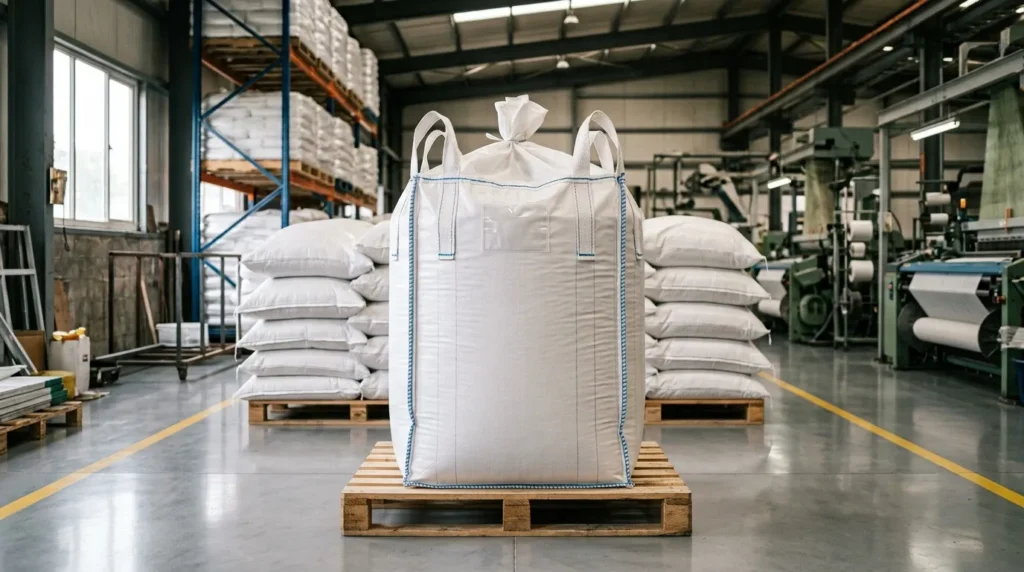
FIBC bags, also known as Flexible Intermediate Bulk Containers or bulk bags, are widely used for transporting and storing dry, flowable materials. They are commonly used for products such as powders, granules, chemicals, minerals, agricultural products, food ingredients, and other bulk materials.
However, not every FIBC bag is designed for the same application. The bag construction, fabric, filling and discharge system, liner, lifting loops, and safety properties can vary depending on the material being handled.
Understanding the different types of FIBC bags can help importers, distributors, and industrial buyers choose a suitable bulk packaging solution for their specific requirements.
What Is an FIBC Bag?
An FIBC bag is a large flexible container generally manufactured from woven polypropylene fabric. It is designed to hold and transport substantial quantities of dry bulk materials while remaining relatively lightweight and easy to handle.
Depending on the design, an FIBC can include lifting loops, filling spouts, discharge outlets, liners, coated fabric, and specialized construction features.
FIBC bags are commonly selected for bulk material handling because they can help simplify storage, transportation, loading, and unloading operations compared with smaller individual packages.
Main Types of FIBC Bags
FIBC bags can be classified in several ways. One common classification is based on their electrical properties, while another focuses on their construction and intended application.
1. Type A FIBC Bags
Type A FIBC bags are made from insulating fabric and do not provide specific electrostatic protection.
They are generally used when the product being handled is not sensitive to static electricity and there is no flammable atmosphere around the bag.
Type A bags can be suitable for many general-purpose bulk materials where electrostatic control is not a major requirement.
2. Type B FIBC Bags
Type B FIBC bags are designed with materials that can help limit the development of propagating brush discharges compared with standard insulating bags.
They may be considered for applications involving certain combustible powders, but the surrounding environment and material characteristics need to be carefully evaluated before selecting this bag type.
3. Type C FIBC Bags
Type C, often called conductive or groundable FIBC bags, are manufactured with conductive elements that need to be properly connected to ground during filling and emptying.
They are commonly considered for environments where controlling electrostatic discharge is important.
Proper grounding procedures are essential when using Type C bags. The complete handling system, including the bag, equipment, material, and operating environment, should be evaluated for safety requirements.
4. Type D FIBC Bags
Type D FIBC bags are designed to provide a controlled approach to electrostatic discharge without requiring conventional grounding in the same way as Type C bags.
They are used in applications where electrostatic risk needs to be managed, subject to the bag’s certified design and the specific handling conditions.
The choice between different conductive and antistatic FIBC solutions should always be based on the material and operating environment.
FIBC Bags Based on Construction
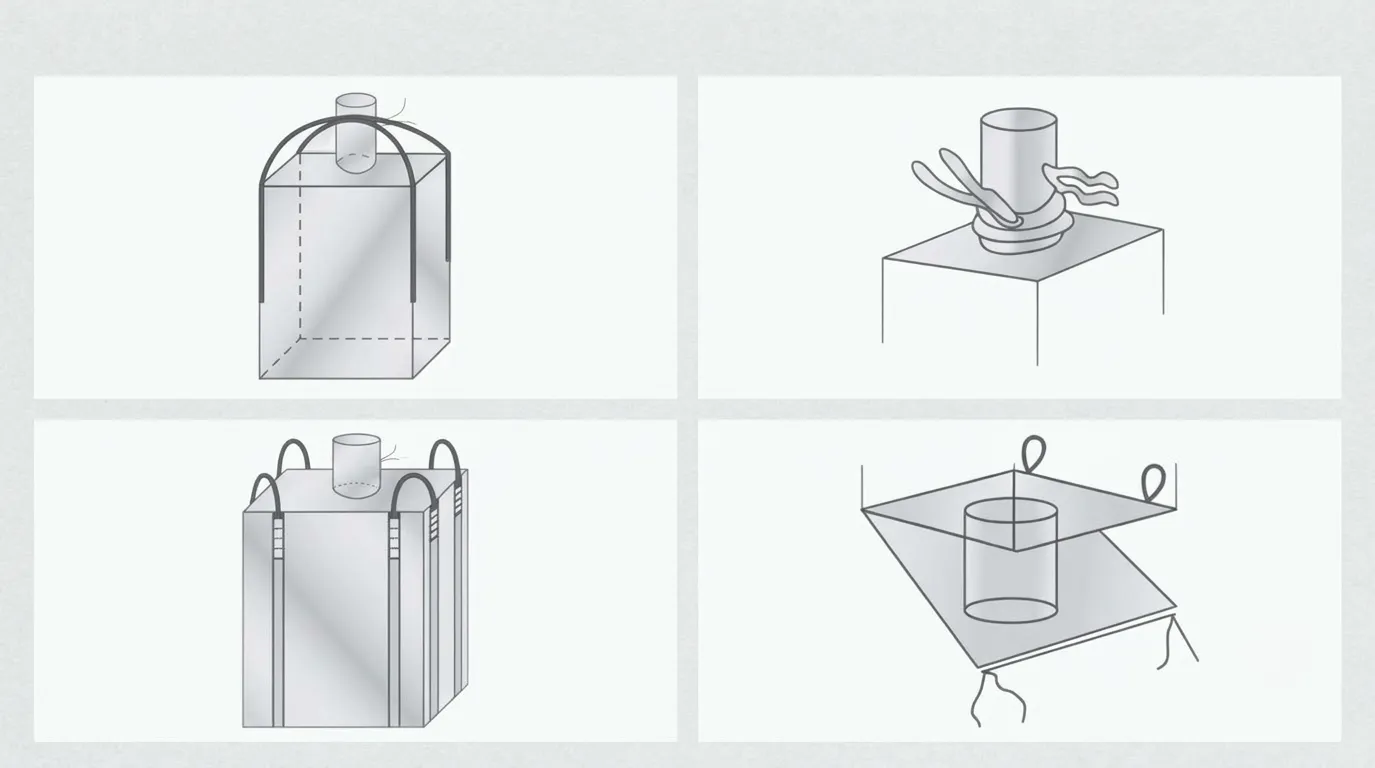
FIBC bags can also be categorized according to how their body panels are constructed.
U-Panel FIBC Bags
U-panel bags are constructed using fabric panels that form a U-shaped body. They are a common option for general bulk material handling and can be manufactured in different capacities and configurations.
Their relatively straightforward construction makes them suitable for a wide range of industrial applications.
4-Panel FIBC Bags
4-panel FIBC bags are manufactured from four individual fabric panels joined together to create the main body.
They generally maintain a more defined rectangular shape when filled, which can be useful for storage and transportation where efficient space utilization is important.
Circular FIBC Bags
Circular FIBC bags are manufactured using circular woven fabric technology. Their construction can provide a relatively smooth outer surface and can be suitable for applications where the shape and appearance of the filled bag are important.
Baffle FIBC Bags
Baffle bags include additional internal fabric panels, commonly known as baffles, that help the filled bag maintain a more stable and compact shape.
This construction can improve stacking efficiency and help make better use of available storage or container space. Baffle FIBCs are often considered when warehouse and transportation efficiency are important.
Special-Purpose FIBC Bags
Some bulk bags are designed with additional features for particular industries or materials.
Food Grade FIBC Bags
Food-grade FIBC bags are manufactured and controlled for applications involving food ingredients and other products requiring appropriate hygiene and material requirements.
Depending on the application, buyers may also require suitable liners, clean manufacturing conditions, certificates, and documentation.
UN Certified FIBC Bags
UN-certified FIBC bags are designed and tested according to applicable requirements for transporting certain dangerous goods.
These bags should be selected based on the specific material classification, packaging requirements, and applicable regulations rather than simply choosing a bag based on size or capacity.
Conductive FIBC Bags
Conductive FIBC bags are used for applications where static electricity needs to be controlled.
They can be particularly relevant when handling materials that may create an electrostatic hazard. The appropriate FIBC type depends on the material, equipment, environment, and required safety procedures.
Ventilated FIBC Bags
Ventilated bulk bags are designed with ventilation features that can support airflow around the contents.
They may be used for selected agricultural and other materials where airflow can be beneficial during storage and transportation.
How to Choose the Right FIBC Bag
Choosing an FIBC is not simply a matter of selecting the largest available capacity. Several specifications should be considered before placing an order.
Material Being Packed
Start by identifying the material that will be stored or transported. Powder, granules, agricultural products, chemicals, minerals, and food ingredients can have different packaging requirements.
Bag Capacity
FIBC bags are available in different capacities. The required size should be determined according to the product’s bulk density, filling quantity, handling equipment, and transportation requirements.
Filling and Discharge Design
The filling and discharge arrangement can significantly affect handling efficiency. Options may include different filling spouts, discharge outlets, flap designs, or open-top configurations.
Liner Requirements
Some materials may require an inner liner to provide additional protection from moisture, contamination, leakage, or product interaction.
The liner material and construction should be selected according to the product and intended use.
Lifting Configuration
The lifting-loop arrangement should match the available handling equipment. Different FIBC designs can use different loop configurations depending on how the bags will be lifted, moved, and stored.
Safety and Certification
For certain materials, especially food products, chemicals, combustible powders, or regulated goods, certification and safety requirements can become an important part of the specification.
Buyers should confirm the required standards and documentation before finalizing the FIBC design.
Common Applications of FIBC Bags
FIBC bags are used across many industries because their flexible construction can accommodate different bulk products and handling systems.
Common applications include:
- Agricultural products and seeds
- Chemicals and industrial powders
- Minerals and construction materials
- Food ingredients
- Pharmaceutical raw materials
- Plastic granules and resins
- Animal feed
- Recycling and industrial materials
The appropriate bag design depends on the product characteristics, filling process, storage conditions, transportation method, and discharge requirements.
FIBC Bag Specifications Buyers Should Confirm
Before requesting an FIBC bag quotation, buyers can prepare a basic specification sheet containing:
- Bag capacity or safe working load
- Bag dimensions
- Fabric type and GSM
- Construction style
- Filling and discharge arrangement
- Lifting-loop configuration
- Liner requirement
- Coating requirement
- Printing requirements
- Safety factor
- Product application
- Certification requirements
- Packaging and shipping requirements
Providing these details early can make communication with an FIBC bag supplier more efficient and reduce specification misunderstandings.
Why FIBC Design Matters in Bulk Material Handling
The right FIBC design can influence more than packaging. It can affect how efficiently a product is filled, lifted, stored, transported, and discharged.
For example, a standard construction may work well for general dry materials, while a baffle bag can be considered when improved shape retention and stacking efficiency are required. Similarly, specialized electrical properties may become important when handling materials with electrostatic risks.
For this reason, FIBC selection should be based on the complete handling process rather than only the bag’s appearance or dimensions.
FIBC Bags for Global Buyers
Handmada supplies FIBC bags for buyers looking for bulk packaging solutions with clear specifications and export coordination. Depending on the application, buyers can discuss bag construction, capacity, filling and discharge options, liners, fabric requirements, printing, and other specifications.
For international sourcing, it is useful to finalize the product specification, required documentation, packing method, quantity, destination market, and delivery requirements before confirming an order.
Frequently Asked Questions About FIBC Bags
What are the main types of FIBC bags?
The main types can be classified by electrical properties, such as Type A, Type B, Type C, and Type D. FIBCs can also be classified by construction, including U-panel, 4-panel, circular, and baffle bags.
Which FIBC bag is suitable for food products?
Food-grade FIBC bags can be used for suitable food ingredients and other food-related materials when the bag meets the required hygiene, material, and certification requirements. The exact specification should be confirmed according to the product and destination market.
What is the difference between Type C and Type D FIBC bags?
Type C FIBC bags use conductive components that are designed to be grounded during handling. Type D FIBC bags are designed to control electrostatic discharge through their specific material construction without conventional grounding in the same manner as Type C. The correct choice depends on the material and operating environment.
What is a baffle FIBC bag?
A baffle FIBC bag contains internal fabric panels that help the bag retain a more stable shape when filled. This can make the bag more suitable for efficient stacking and storage.
Can FIBC bags have liners?
Yes. An FIBC can be supplied with an inner liner when the application requires additional protection against moisture, contamination, leakage, or interaction between the product and the woven fabric.
What information should I provide when ordering FIBC bags?
Buyers should ideally provide the required capacity, dimensions, material being packed, bag construction, filling and discharge requirements, liner needs, lifting arrangement, certification requirements, quantity, and destination market.
Conclusion
FIBC bags are available in a wide range of constructions and specifications, making them suitable for different bulk material handling requirements. Type A, B, C, and D bags address different electrical considerations, while U-panel, 4-panel, circular, and baffle constructions offer different handling and storage characteristics.
The right choice depends on the material, capacity, filling and discharge process, storage conditions, transportation method, safety requirements, and applicable certifications.
For global buyers, clearly defining these requirements before ordering can make FIBC sourcing more straightforward and help ensure that the selected bulk bag matches the intended application.
Follow Us On: Instagram | LinkedIn | X (Twitter) | Facebook | YouTube | Pinterest