Choosing the right flooring can have a major impact on the appearance, maintenance, and everyday performance of an interior. Today, homeowners, designers, contractors, and commercial buyers have more flooring options than ever, but not every material offers the same balance of durability, water resistance, appearance, and installation convenience.
SPC flooring has become a popular option for modern residential and commercial interiors because it combines a rigid core with realistic wood-look designs and practical installation features.
But what exactly is SPC flooring, how is it made, where can it be used, and what should you consider before choosing it?
This guide explains everything you need to know about SPC flooring, from its basic construction and benefits to available sizes, designs, applications, installation, and maintenance.
What Is SPC Flooring?
SPC flooring stands for Stone Polymer Composite flooring. It is a type of rigid-core flooring designed to provide a stable, durable, and water-resistant flooring surface.
Unlike traditional wood flooring, SPC flooring uses a rigid composite core rather than natural timber. The construction allows manufacturers to create flooring with realistic wood-inspired colors, textures, and plank designs while providing practical performance for everyday interiors.
SPC flooring is commonly used in homes, apartments, offices, retail stores, restaurants, cafés, clinics, and hospitality environments.
For buyers looking for modern flooring collections, Handmada supplies SPC flooring in different plank formats, colors, bevel options, and designs for global interior projects.
How Is SPC Flooring Made?
The performance of SPC flooring comes from its multi-layer construction. While exact construction can vary between products, a typical SPC floor includes several functional layers.
1. UV Layer
The top protective layer helps improve surface protection and supports resistance against everyday exposure and wear.
2. Wear Layer
The wear layer provides additional protection against regular foot traffic, helping the flooring maintain its appearance during everyday use.
3. Design Layer
The design layer gives SPC flooring its visual appearance. Modern printing technology can reproduce wood-inspired colors, grains, and patterns to create a natural-looking floor.
4. SPC Core Layer
The rigid SPC core provides the structure and stability of the flooring. This is one of the main features that distinguishes SPC flooring from many other flexible flooring products.
5. Underlayment
Depending on the product specification, an underlayment layer may be included to support installation, comfort, and overall flooring performance.
The combination of these layers creates a flooring product designed for practical everyday applications.
What Are the Benefits of SPC Flooring?
SPC flooring is widely considered for projects where appearance, durability, water resistance, and installation efficiency are important.
Waterproof Performance
One of the main reasons buyers choose SPC flooring is its water-resistant rigid core. This makes it suitable for many interior areas where occasional moisture may be present.
SPC flooring can be used in spaces such as kitchens, living areas, retail interiors, offices, and other commercial environments. However, proper installation and site conditions remain important for long-term performance.
Easy Installation
Many SPC flooring products use a click-lock installation system. The interlocking design can make installation faster and more convenient compared with some traditional flooring methods.
This can be particularly useful for renovation projects, commercial interiors, and projects where installation time needs to be controlled.
Durable Surface
SPC flooring is designed to handle regular everyday use. Its layered construction, including the wear layer and rigid core, provides a practical flooring solution for residential and commercial environments.
The appropriate wear layer and product specification should be selected according to the expected traffic level.
Realistic Wood-Look Appearance
Modern SPC flooring can reproduce the visual characteristics of wood while offering a more consistent manufactured product.
Different colors, plank sizes, surface finishes, and bevel details allow buyers and designers to create different interior styles.
Easy Maintenance
SPC flooring generally has a smooth, practical surface that can be cleaned as part of a regular interior maintenance routine.
Routine sweeping, vacuuming, and suitable damp cleaning can help keep the floor looking clean. Specific cleaning instructions should always follow the manufacturer’s product recommendations.
What Sizes of SPC Flooring Are Available?
SPC flooring is available in different plank sizes to suit different interior layouts and design preferences.
Handmada offers several SPC flooring formats, including:
|
SPC Flooring Format |
Typical Application |
|
181 × 1200mm |
Homes, apartments, offices, retail, hospitality |
|
228 × 1524mm |
Larger interiors and spaces where a wider plank appearance is preferred |
|
150 × 600mm Herringbone |
Feature floors, apartments, boutiques, cafés, and design-led interiors |
The availability of thickness, wear layer, colors, bevel options, and other specifications can vary depending on the product and buyer requirements.
Herringbone SPC Flooring
Herringbone flooring is a patterned layout created by arranging planks in a distinctive zigzag formation.
Herringbone SPC flooring combines this traditional visual pattern with the practical characteristics of SPC flooring.
Handmada offers a 150 × 600mm herringbone format, suitable for feature floors, apartments, boutiques, cafés, and other interiors where the flooring itself is intended to become part of the design.
The herringbone format can create a more decorative appearance than conventional straight plank installation while maintaining the practical benefits associated with SPC flooring.
SPC Flooring Bevel Edge Options
Bevel edges can influence how individual flooring planks appear after installation.
Two common options include micro bevel and painted bevel.
Micro Bevel
A micro bevel creates a subtle separation between individual planks. It provides a cleaner and more understated appearance while still defining the plank edges.
Painted Bevel
A painted bevel creates a more noticeable edge and can produce a subtle shadow-line effect between planks. This can help create a more defined wood-floor appearance.
The appropriate bevel option depends on the desired visual style and product specification.
Popular SPC Flooring Colors
SPC flooring is available in a wide range of colors and wood-inspired tones to suit different interior concepts.
Common options include:
- White
- Ebony
- Honey
- Ash
- Golden
- Wenge
- Brown
- Coco
- Grey
- Carbon
- Black
The right color can influence how large, bright, warm, or contemporary a room appears. Lighter flooring can create a brighter visual atmosphere, while darker tones can provide stronger contrast and a more dramatic appearance.
Where Can SPC Flooring Be Used?
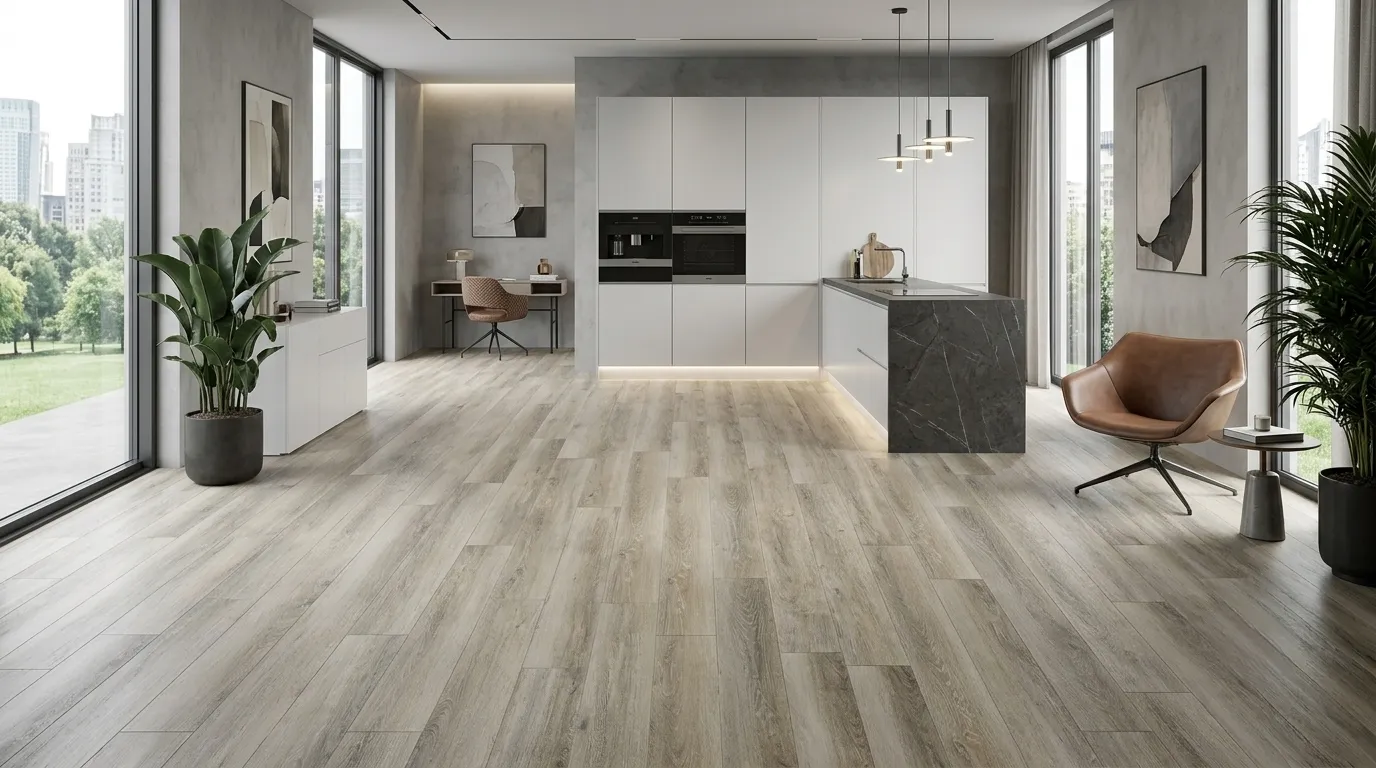
SPC flooring can be used across a wide range of residential and commercial interiors.
Homes and Apartments
SPC flooring can be used in living rooms, bedrooms, kitchens, hallways, and other residential areas where practical maintenance and a wood-look appearance are desired.
Offices and Clinics
For professional spaces, SPC flooring can provide a clean and consistent floor appearance while supporting everyday maintenance requirements.
Retail Stores and Showrooms
Retail environments often need flooring that combines visual appeal with practical durability. Different SPC colors and plank formats can be selected to complement a store’s interior design.
Restaurants and Cafés
Restaurants and cafés require surfaces that can be maintained regularly while contributing to the overall atmosphere of the space. SPC flooring can be considered for suitable interior areas when the product specification and installation requirements match the project.
Hospitality Interiors
Hotels and other hospitality environments can use SPC flooring to create consistent wood-inspired interiors across rooms, corridors, and selected common areas.
How Is SPC Flooring Installed?
Many SPC flooring products are designed for click-lock installation. The planks connect through an interlocking system, creating a continuous floor surface.
Although installation procedures vary by product, the general process includes:
- Prepare the subfloor – The installation surface should be clean, dry, stable, and appropriately level.
- Plan the layout – Determine the plank direction and starting point before installation.
- Allow required acclimation – Follow the product manufacturer’s requirements for acclimation and site conditions.
- Install the planks – Connect the planks according to the manufacturer’s click-lock instructions.
- Maintain expansion requirements – Where required, leave appropriate expansion gaps around walls and fixed objects.
- Complete the edges – Install suitable trims or finishing profiles where necessary.
For commercial or large-scale projects, professional installation is recommended to ensure the flooring is installed according to the product specification and site conditions.
How to Maintain SPC Flooring
One advantage of SPC flooring is that routine maintenance can be relatively straightforward.
A basic maintenance routine can include:
- Sweep or vacuum regularly to remove dust and loose dirt.
- Clean spills promptly.
- Use a suitable damp mop when required.
- Avoid excessive standing water during cleaning.
- Use cleaning products recommended for the specific flooring.
- Use protective pads under furniture where appropriate.
- Avoid dragging heavy furniture directly across the floor.
Always follow the manufacturer’s maintenance instructions for the specific SPC flooring product.
What Should You Consider Before Choosing SPC Flooring?
Not every SPC flooring product is identical. Before selecting a product for a project, buyers should consider several specifications.
Thickness
Floor thickness can influence the overall construction, feel, and suitability of the product for different applications.
Wear Layer
The wear layer should be considered according to the expected level of foot traffic. Residential and commercial applications may have different requirements.
Plank Size
Choose a plank format based on the room size and desired visual effect. Larger planks can create a cleaner visual flow, while smaller formats can offer more flexibility.
Bevel Design
Micro bevel and painted bevel options create different visual effects between planks.
Color and Surface Design
Choose a color and design that complement the overall interior concept and target market.
Installation System
Confirm the available installation system and ensure that the subfloor and site conditions meet the product requirements.
Packaging and Export Requirements
For international buyers, product specifications are only one part of the purchasing process. Packaging, documentation, quantity, samples, lead time, and shipping coordination should also be considered.
Why Choose Handmada for SPC Flooring?
Handmada supplies SPC flooring for global importers and interior projects with a focus on product specifications, design options, and export coordination.
The collection includes standard plank formats, large-format planks, and herringbone SPC flooring.
Handmada’s SPC flooring range includes:
- 181 × 1200mm SPC flooring
- 228 × 1524mm SPC flooring
- 150 × 600mm herringbone SPC flooring
- Multiple wood-inspired color options
- Micro bevel and painted bevel options
- Waterproof rigid-core construction
- Click-lock installation options
- Product specifications and documentation
- Sample support on request
- Export-oriented packing and coordination
You can explore the complete collection on the Handmada SPC Flooring page.
Frequently Asked Questions About SPC Flooring
What is SPC flooring?
SPC flooring stands for Stone Polymer Composite flooring. It is a rigid-core flooring product designed for durability, water-resistant performance, easy installation, and wood-look interior applications.
Is SPC flooring waterproof?
SPC flooring is commonly selected for its waterproof rigid core and suitability for areas where moisture resistance is important. However, waterproof performance does not eliminate the need for correct installation, suitable subfloor preparation, and proper site conditions.
Is SPC flooring suitable for commercial spaces?
Yes. SPC flooring can be used in offices, clinics, retail stores, restaurants, cafés, hospitality spaces, and other commercial interiors. The appropriate thickness, wear layer, surface finish, and other specifications should be selected according to the project’s traffic and usage requirements.
What sizes of SPC flooring does Handmada offer?
Handmada offers SPC flooring in 181 × 1200mm, 228 × 1524mm, and 150 × 600mm herringbone formats. Exact availability may vary depending on color, thickness, wear layer, bevel, design, and buyer requirements.
What is herringbone SPC flooring?
Herringbone SPC flooring uses rectangular planks arranged in a zigzag pattern. It provides a more decorative flooring layout and is suitable for feature floors, apartments, boutiques, cafés, and design-focused interiors.
What is the difference between micro bevel and painted bevel?
A micro bevel creates a subtle distinction between adjacent planks, while a painted bevel creates a more defined edge and shadow-line effect. Both can contribute to a more realistic plank appearance.
Is SPC flooring easy to install?
Many SPC flooring products feature click-lock systems that can simplify installation. However, the subfloor should be properly prepared and installation should follow the specific manufacturer’s instructions.
How do you clean SPC flooring?
Regular sweeping or vacuuming, prompt spill cleaning, and suitable damp cleaning can help maintain SPC flooring. Always use cleaning methods and products recommended for the specific flooring product.
Conclusion
SPC flooring has become a practical option for modern interiors because it combines a rigid core, water-resistant performance, realistic wood-inspired designs, and convenient installation features.
From standard plank flooring to large-format designs and herringbone SPC flooring, different formats can be selected according to the space, design requirements, and expected level of use.
Before choosing SPC flooring, consider important factors such as thickness, wear layer, plank size, bevel edge, color, installation system, and application requirements.
For global buyers looking for different SPC flooring formats and specifications, Handmada provides product options designed for residential, commercial, retail, hospitality, and interior projects.
Explore Handmada’s SPC flooring collection to review available formats, colors, specifications, and export support.
Follow Us On: Instagram | LinkedIn | X (Twitter) | Facebook | YouTube | Pinterest