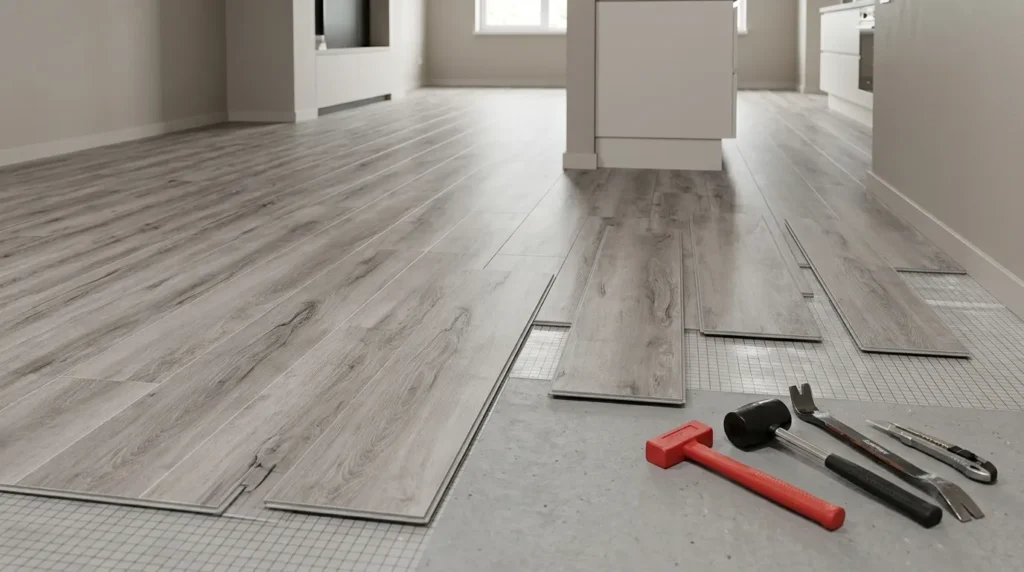
If you are comparing floors, one of the first questions you will face is the best thickness for SPC flooring. The answer depends on where you install it, how much traffic it will see and what your subfloor looks like. For most homes, 4mm to 5mm total thickness with a 0.3mm to 0.5mm wear layer works well. For busy commercial spaces, 5mm to 6.5mm with a 0.5mm to 0.7mm wear layer is the safer choice.
This guide explains what “thickness” really means, compares each size, and helps you choose without overpaying.
Quick Answer: Best SPC Flooring Thickness by Space
Space | Recommended total thickness | Recommended wear layer |
Bedrooms, living rooms | 4mm to 5mm | 0.3mm (12 mil) to 0.5mm (20 mil) |
Kitchens, hallways | 5mm to 6mm | 0.5mm (20 mil) |
Retail shops, offices | 5mm to 6.5mm | 0.5mm to 0.7mm (20 to 28 mil) |
Restaurants, hotels, malls | 6mm to 8mm | 0.7mm (28 mil) |
Slightly uneven subfloors | 6mm or more (with attached underlay) | 0.5mm or more |
What Does “SPC Flooring Thickness” Actually Mean?
SPC (Stone Plastic Composite) flooring is a rigid-core floor made of layers. If you are new to it, read our guide on what is SPC flooring first. When a supplier quotes thickness, they may mean different things:
- Total thickness: the whole plank, usually 3.5mm to 8mm or more.
- Wear layer: the clear protective top coat that resists scratches and scuffs.
- Core thickness: the rigid stone-plastic centre that gives stability.
- Underlay (backing): an optional attached pad, usually IXPE or EVA foam, about 1mm to 1.5mm.
Many buyers focus only on total thickness. In practice, wear layer thickness matters more for durability, while total thickness matters more for comfort, stability and installation.
Understanding Wear Layer Thickness (Mil vs mm)
The wear layer is measured in mils (1 mil = 0.001 inch) or millimetres:
- 12 mil (0.3mm): light residential use
- 20 mil (0.5mm): heavy residential and light commercial use
- 28 mil (0.7mm): heavy commercial use
A 6mm plank with a thin wear layer will still scratch faster than a 5mm plank with a thicker one. Always check both numbers before you buy.
SPC Flooring Thickness Comparison
3.5mm to 4mm SPC flooring
- Best for: budget projects, bedrooms, rental properties, low-traffic rooms
- Pros: affordable, flexible for tight spaces, adds very little floor height
- Cons: less forgiving on uneven subfloors, feels firmer underfoot
5mm SPC flooring
- Best for: most homes, apartments, small offices
- Pros: the best balance of price, strength and stability, and a popular choice for click-lock installation
- Cons: still needs a reasonably flat subfloor
6mm SPC flooring
- Best for: kitchens, hallways, retail spaces, areas with moderate subfloor imperfections
- Pros: more rigidity and better sound absorption, handles heavy furniture well
- Cons: costs more, and the extra height may need door trimming
7mm to 8mm SPC flooring
- Best for: high-traffic commercial spaces, hotels, showrooms
- Pros: maximum stability, strong locking system, comfortable feel
- Cons: highest cost, and not needed for typical home use
Does Thicker SPC Flooring Mean Better Quality?
Not always. A thicker plank feels more solid and can hide minor subfloor flaws, but quality depends on:
- Core density: a dense, well-made core resists dents and expansion.
- Wear layer quality: virgin PVC performs better than recycled material.
- Locking system: a precise click joint prevents gaps.
- Manufacturing consistency: uniform thickness across every plank.
Because SPC is dense and rigid, it is naturally more stable than flexible vinyl, even at 4mm. Paying extra for 8mm in a bedroom is usually unnecessary.
6 Factors That Decide the Right Thickness
1. Foot traffic
Homes need less than offices. Choose a thicker wear layer for shops, cafés and corridors.
2. Subfloor condition
SPC is rigid, so it cannot fully mask big bumps. A thicker plank or attached underlay helps with minor flaws, but a very uneven floor should be levelled first.
3. Moisture exposure
SPC is highly water-resistant at any thickness. See our explainer on whether SPC flooring is waterproof for details on moisture and subfloor conditions.
4. Comfort and noise
Thicker planks, especially with IXPE underlay, feel quieter and slightly softer underfoot. This matters in apartments and offices.
5. Height clearance
Check doors, appliances and adjoining floors. A thinner 4mm plank is easier to fit under doors and in renovations.
6. Budget
Cost rises with thickness. Our breakdown of the SPC flooring cost to install shows how material and labour affect your total.
Thickness for Residential vs Commercial Use
Residential: 4mm to 5mm with a 0.3mm to 0.5mm wear layer is enough for most homes. Choose 5mm or above for kitchens and entryways.
Commercial: 5mm to 6.5mm with a 0.5mm to 0.7mm wear layer handles regular foot traffic and rolling loads. For hotels, malls and showrooms, go to 6mm to 8mm with a 0.7mm wear layer.
Always match the product to its rated use class, not just its thickness. Look for emissions certifications such as FloorScore, which verifies low indoor air emissions for hard-surface flooring.
Does Underlay Count in the Thickness?
Often yes. Many manufacturers quote total thickness including a pre-attached underlay of 1mm to 1.5mm. So a “5mm” plank might have a 3.5mm to 4mm core plus 1mm to 1.5mm of IXPE backing. Ask your supplier for the core thickness separately, because two “5mm” floors can perform differently. If your plank already has underlay, do not add another layer on top unless the manufacturer allows it.
Installation Tips by Thickness
- Make sure the subfloor is clean, dry and level. Our guide on how long it takes to install SPC flooring covers preparation and timing.
- Leave a small expansion gap along the walls.
- Let the planks acclimatise in the room before installing.
- For thinner planks (4mm), pay extra attention to subfloor flatness.
- For thicker planks (6mm and above), check door clearances and transition profiles beforehand.
How to Choose: A Simple 3-Step Method
- Identify the traffic level (home, light commercial, heavy commercial).
- Pick the wear layer first (0.3mm, 0.5mm or 0.7mm).
- Then choose total thickness based on your subfloor, comfort needs and height limits.
For a deeper checklist on colours, finishes and specifications, read how to choose SPC flooring. If you want to understand why this material is so popular, see the benefits, features and applications of SPC flooring.
Buying SPC Flooring in Bulk? Ask Your Supplier These Questions
If you are an importer, distributor or contractor, thickness consistency matters as much as the number on the spec sheet. Ask:
- What is the exact core thickness and wear layer thickness?
- Is the wear layer virgin PVC?
- What is the thickness tolerance?
- Which underlay (IXPE or EVA) is attached?
- Which certifications are available?
Handmada supplies SPC flooring in multiple thicknesses and wear layer options. You can explore our SPC flooring range, or read our guide to the best SPC flooring manufacturer from India before you shortlist suppliers.
Frequently Asked Questions
What is the best thickness for SPC flooring in a home?
For most homes, 4mm to 5mm total thickness with a 0.3mm to 0.5mm wear layer is the best value. Use 5mm to 6mm for kitchens and high-traffic rooms.
Is 4mm SPC flooring good enough?
Yes, for bedrooms, living rooms and low-traffic areas, provided the subfloor is flat and the wear layer is at least 0.3mm.
Is 6mm SPC flooring better than 5mm?
6mm is slightly more rigid and quieter, and it tolerates minor subfloor flaws better. For a normal home, 5mm performs just as well and costs less.
What wear layer thickness do I need for SPC flooring?
Use 0.3mm for light residential, 0.5mm for heavy residential or light commercial, and 0.7mm for heavy commercial use.
Does SPC flooring thickness affect waterproofing?
No. The stone-plastic core is water-resistant at any thickness. Standing water and moisture from the subfloor should still be managed.
Can I install SPC flooring over existing tiles?
Often yes, if the tiles are firmly bonded, clean and level, and grout lines are filled or smoothed. Always follow the manufacturer’s instructions.
Does thicker SPC flooring cost more?
Yes. Price generally rises with both total thickness and wear layer thickness. See our tile and flooring cost guide for a broader comparison.
Final Verdict
The best thickness for SPC flooring is the one that matches your traffic, subfloor and budget:
- 4mm to 5mm for most homes
- 5mm to 6.5mm for kitchens and light commercial spaces
- 6mm to 8mm for heavy commercial projects
Always check the wear layer, core density and certifications, not just the headline thickness.
Need help selecting the right specification or bulk supply? Contact the Handmada team for samples, specifications and a quote.