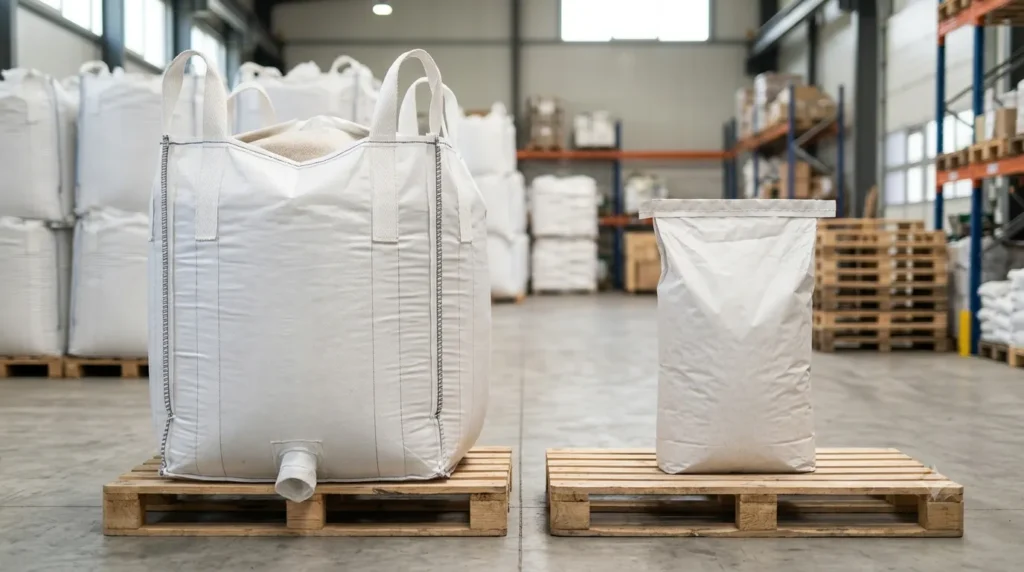
If you import bulk materials such as chemicals, grains, minerals, fertilizers or construction aggregates, choosing the right FIBC bag supplier from India can directly affect your costs, safety and delivery timelines. India has become one of the world’s leading sources of flexible intermediate bulk containers (FIBCs), also called jumbo bags, big bags or bulk bags, thanks to its strong polypropylene supply chain, skilled workforce and competitive pricing.
This guide explains what to look for in an Indian FIBC supplier, which bag types suit which products, and how to avoid common sourcing mistakes. If you already know what you need, you can explore our FIBC bag range or contact our team for a quote.
What Is an FIBC Bag?
An FIBC is a large woven polypropylene bag designed to store and transport dry, flowable products in bulk. Most standard bags carry between 500 kg and 2,000 kg, and they can be lifted by forklift or crane using built-in loops. According to Wikipedia’s overview of flexible intermediate bulk containers, FIBCs are widely used because they are lightweight, stackable and cost-effective compared with rigid containers.
If you are still comparing packaging formats, read our guide on FIBC bags vs regular bags.
Why Source FIBC Bags from India?
Global buyers choose Indian suppliers for several practical reasons:
- Competitive pricing: Local access to polypropylene granules and a mature textile and weaving industry keeps production costs low.
- Customization: Indian manufacturers commonly offer custom sizes, liners, printing, loop styles and spout designs.
- Export experience: Established exporters are familiar with international documentation, container loading and port logistics.
- Scalability: Capacity ranges from trial orders to full-container, recurring supply.
- Quality options: Many facilities produce to international standards and can supply test reports on request.
India’s growing role in global shipping is also reflected in our article on high-demand export products driving global trade. For official export guidance, buyers and sellers can refer to India’s Directorate General of Foreign Trade (DGFT).
Types of FIBC Bags Offered by Indian Suppliers
Choosing the wrong type is one of the most expensive mistakes in bulk packaging. Here are the main categories:
Type | Key Feature | Typical Use |
Type A | Standard, no static protection | Non-flammable, non-sensitive products (sand, grains) |
Type B | Low-propagating brush discharge breakdown voltage | Dry powders where sparks are a mild concern |
Type C | Conductive, must be grounded | Flammable powders, solvent-sensitive environments |
Type D | Static dissipative, no grounding needed | Hazardous environments such as chemicals and pharma intermediates |
Baffle bags | Internal panels keep a square shape | Better stacking and container space utilization |
Food-grade bags | Clean production, food-safe liners | Sugar, flour, rice, spices |
UN certified bags | Tested for dangerous goods | Hazardous materials transport |
For a deeper breakdown, see our full guide to the types of FIBC bags.
Key Specifications to Check Before You Order
When requesting quotes from any FIBC bag supplier in India, share these details so quotes are comparable:
- Safe Working Load (SWL): Commonly 500 kg to 2,000 kg.
- Safety Factor Ratio (SFR): Typically 5:1 for single-trip use and 6:1 for multi-trip bags.
- Dimensions: Length × width × height, matched to your container and product density.
- Fabric GSM: Heavier fabric adds strength and cost.
- Top and bottom design: Open top, duffle top, spout top, flat bottom or discharge spout.
- Liner: Polyethylene liner for moisture or fine-powder protection.
- Printing: Brand name, handling symbols and safety labels.
- UV treatment: Important if bags will be stored outdoors.
Not sure about load limits? Read how much weight an FIBC bag can hold and our guide on how to choose the right FIBC bag.
How FIBC Bags Are Manufactured in India
A reliable supplier controls quality at every stage:
- Raw material selection: Virgin polypropylene granules with UV stabilizers.
- Extrusion and tape making: Granules are melted and drawn into tapes.
- Weaving: Tapes are woven on circular or flat looms into fabric.
- Coating and lamination: Optional, for moisture resistance.
- Cutting and stitching: Panels, lifting loops and spouts are assembled.
- Testing: Cyclic top-lift and drop tests confirm strength.
- Packing and dispatch: Bales are compressed for efficient shipping.
See the full process in how FIBC bags are manufactured.
Certifications and Compliance to Ask For
Before trusting any exporter, ask for documentation rather than relying on claims. Useful items include:
- Company registration and export credentials (IEC)
- Quality management certification such as ISO 9001
- Third-party test reports for SWL and SFR
- UN certification if you are shipping dangerous goods
- Food-safety certification for food-grade bags
- Electrostatic test reports for Type C and Type D bags
Packaging standards and training resources are also available through the Indian Institute of Packaging.
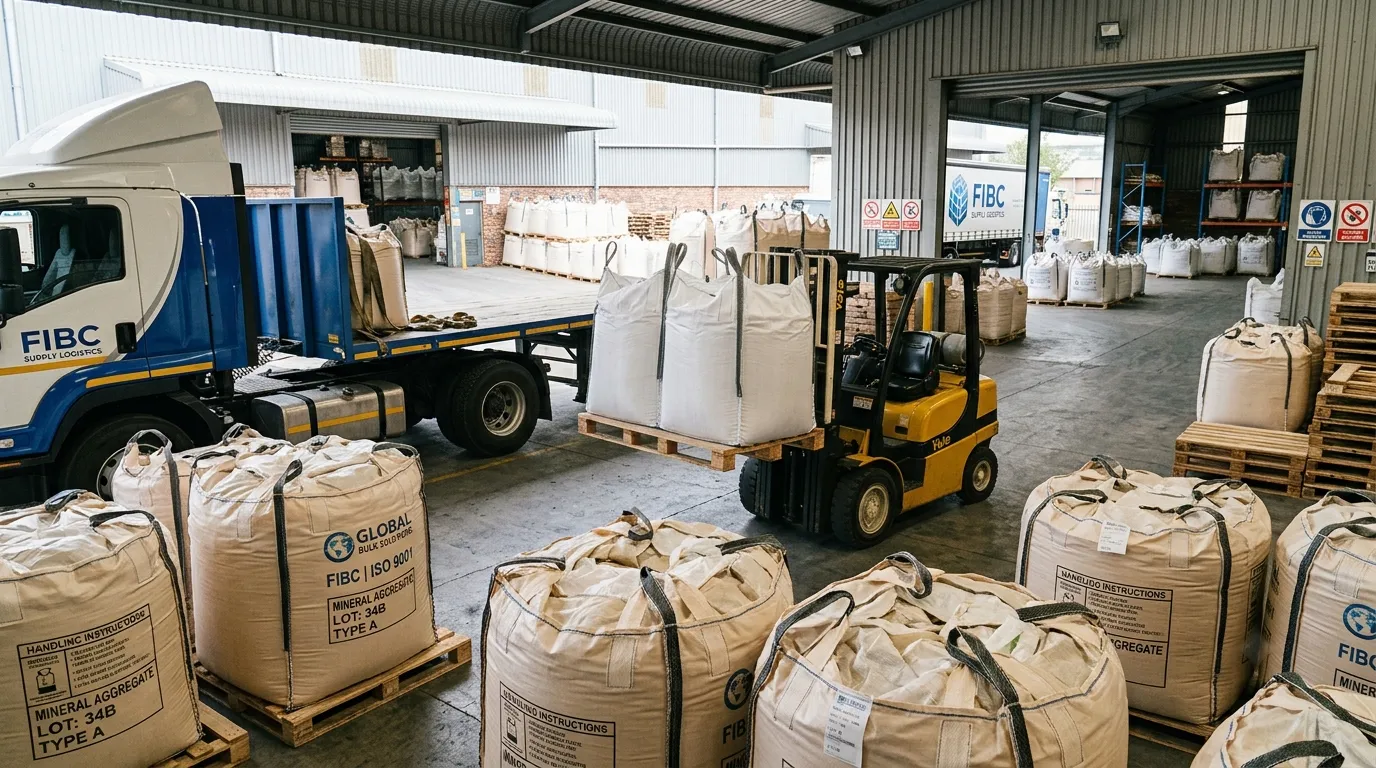
How to Choose the Right FIBC Supplier from India
Use this checklist when shortlisting vendors:
- Experience: How long have they exported, and to which regions?
- Samples: Will they provide samples or a trial batch before bulk production?
- Testing: Can they share lab results for your exact specification?
- Customization: Can they match your dimensions, liners and print?
- Lead time: What is the production plus shipping timeline?
- Minimum order quantity (MOQ): Does it suit your volume?
- Communication: Are responses fast, clear and technically accurate?
- Payment and logistics terms: FOB, CIF and other Incoterms should be stated clearly.
You can compare these criteria against our article on the best FIBC bag manufacturer, and learn more about who we are.
Factors That Affect FIBC Bag Pricing
Prices vary widely, so avoid choosing on the lowest quote alone. Main cost drivers are:
- Fabric weight and polypropylene prices
- Bag type (Type C and D cost more than Type A)
- Liners, coatings and special spouts
- Printing and branding
- Order quantity
- Testing and certification
- Freight and container utilization
A slightly higher unit price from a verified supplier is often cheaper than losing a shipment to bag failure.
Common Mistakes Buyers Make
- Ordering without defining product density and handling method
- Ignoring electrostatic requirements for powders
- Skipping sample approval
- Not confirming SFR and test reports
- Overlooking container optimization, since baffle bags can fit more per container
Why Work with Handmada?
At Handmada, we supply FIBC bags for importers and industrial buyers who need consistent quality and dependable export support. Our team helps you select the right bag type, specification and packing method for your product and destination. Browse our FIBC bag category or send your requirements through our contact page and we will respond with a detailed quotation.
Frequently Asked Questions
Which is the best FIBC bag supplier from India?
The best supplier is one that can prove its quality with test reports, offers samples, matches your specification and has proven export experience. Use the checklist above to compare options objectively.
What is the MOQ for FIBC bags from India?
MOQs vary by manufacturer and customization level. Standard bags often have lower minimums, while custom-printed or specialized bags may require larger orders. Confirm directly with the supplier.
Can I get custom-printed FIBC bags?
Yes. Most Indian exporters offer custom printing for branding, handling instructions and safety labels.
What is the difference between Type C and Type D bags?
Type C bags are conductive and must be grounded during filling and discharge. Type D bags dissipate static safely without grounding.
How long does it take to receive an order?
Timelines depend on quantity, customization and shipping method. Ask your supplier for separate production and freight estimates.
Conclusion
Finding the right FIBC bag supplier from India comes down to verifying specifications, certifications, testing and export capability, not just comparing prices. Define your product, load and handling needs first, request samples, and choose a supplier who communicates clearly. Ready to start? Request a quote from Handmada or view our FIBC bag products.