If you import bulk materials such as grains, chemicals, minerals, fertilizers or construction products, the bags you pack them in matter as much as the product. Choosing the right FIBC bag manufacturer in India can protect your shipment, your workers and your reputation. Choosing the wrong one can mean torn bags, rejected consignments and delays at the port.
This guide is written for global buyers. It explains why so many importers source from India, what “best” really means when you compare suppliers, which documents to ask for, and how the process works from first inquiry to shipment. You can see our own range of FIBC bags while you read.
Key Takeaways
- India is a well-established source of FIBC (jumbo or bulk) bags, with a large manufacturing base and wide export experience.
- The “best” manufacturer is the one that fits your product, your destination market’s rules and your quality expectations, not simply the biggest name.
- Always check whether the supplier is a real manufacturer or a trader.
- Ask for test reports, certifications and samples before placing a bulk order.
- Clear specifications and good communication prevent most import problems.
Why Global Buyers Source FIBC Bags from India
India has become one of the leading countries for FIBC production, and Gujarat is widely seen as a major manufacturing hub. Several reasons draw international buyers here:
- A complete supply chain. Polypropylene raw material, tape extrusion, weaving, coating, printing and stitching are all available within the country, which supports consistent production.
- A wide product range. Manufacturers make standard bags as well as baffle, U-panel, circular, ventilated, anti-static, food-grade and UN-marked bags.
- Flexible customization. Size, safe working load, fabric weight, loops, spouts, liners and printing can be adapted to your handling system.
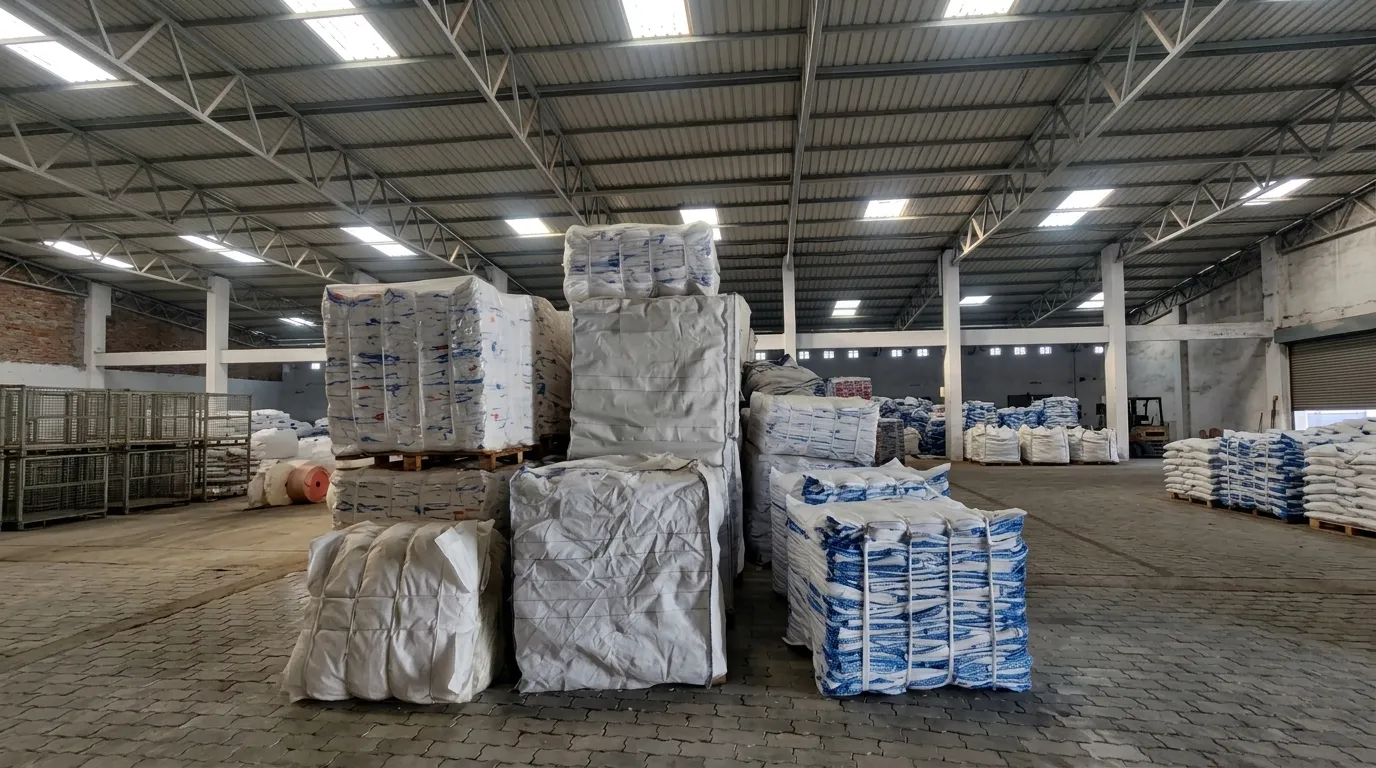
- Export experience. Many Indian factories already pack, document and ship to Europe, the Middle East, Africa, Southeast Asia and the Americas, and are familiar with export paperwork.
- Access to major ports. Ports such as Mundra and Nhava Sheva connect Indian exporters to global shipping routes.
Experience in the country is a starting point, not a guarantee. Quality varies from one factory to the next, so you still need to evaluate each supplier carefully.
What Makes the “Best” FIBC Bag Manufacturer? 8 Criteria That Matter
No single ranking can tell you who is best for your needs. These eight criteria will.
1. A Real Manufacturing Capability
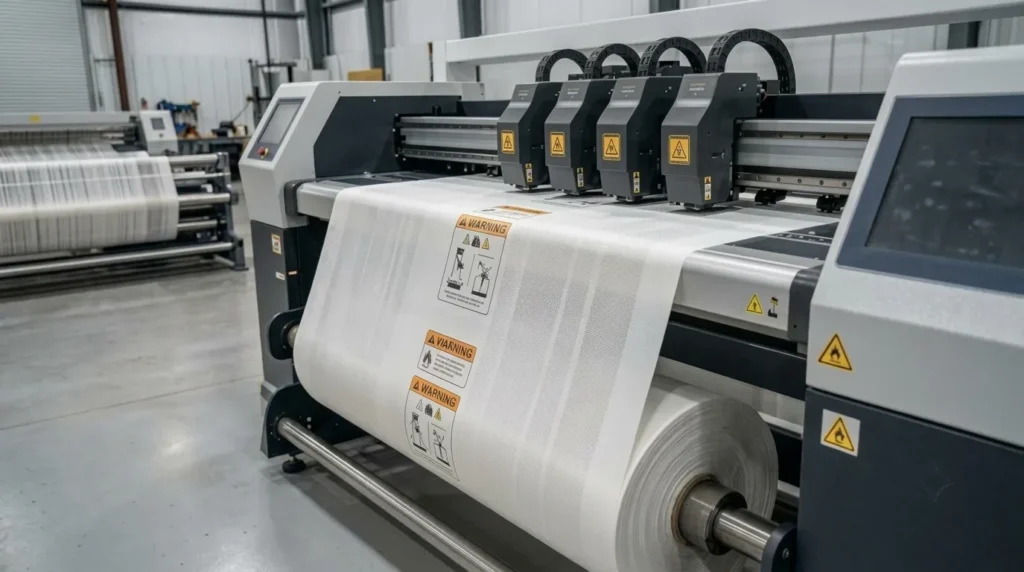
Find out whether the company controls the key stages itself: tape extrusion, weaving, cutting, stitching and testing. A true manufacturer can explain its process, show its machines and solve problems at the source. To understand what to look for, read our guide on how FIBC bags are manufactured.
Manufacturer | Trader | |
Production control | Direct control over materials, weaving and stitching | Depends on outside factories |
Technical answers | Can explain fabric, stitching and testing in detail | May pass questions to the factory |
Customization | Can adjust design and specifications | Limited to what suppliers offer |
Traceability | Batch records from raw material to dispatch | Often unclear |
Factory visit or video audit | Usually possible | May not be possible |
Traders can be useful in some cases, but you should know which one you are dealing with.
2. Certifications and Compliance
Certifications show that a supplier follows documented systems. Depending on your product and market, ask about:
- ISO 9001 for quality management
- ISO 21898 testing for FIBCs used with non-dangerous goods
- BRCGS Packaging Materials or FSSC 22000 for food-grade packaging
- UN certification (for example, the 13H series) for bags carrying dangerous goods
- IEC 61340-4-4 testing for electrostatic-protective bags (Type C and D)
- Food-contact compliance statements for your market, such as EU food-contact regulations or US FDA requirements
- Environmental or social audits such as ISO 14001 or SEDEX, if your own buyers require them
Ask for copies of valid certificates, and check the issuing body, the scope and the expiry date. A certificate for one factory does not automatically cover another.
3. Test Reports and Safety Factor
Every serious FIBC supplier should be able to show test reports for the design you are buying, including the safe working load (SWL) and the safety factor. Single-trip bags are normally rated at 5:1 and reusable bags at 6:1 or higher. Ask for:
- Cyclic top lift and load-to-failure results
- Compression or stacking results, if you stack bags
- UV test results for outdoor storage
- Electrostatic test results for Type C or D bags
Check that the test report matches the exact bag you will receive, not a similar model.
4. Product Range and Technical Advice
A good supplier does not push one bag for every job. They ask about your product, your filling and discharge method, storage conditions and destination, then recommend the right design. If you want to understand the options first, read about the types of FIBC bags. Strong manufacturers can cover standard bags, baffle bags, food-grade bags, anti-static bags and UN-marked bags, or tell you honestly when something is outside their scope.
5. Customization and Sampling
Look for a supplier who will build to your specification rather than only sell fixed models. Useful options include:
- Dimensions, SWL and safety factor
- Fabric weight and coating
- Top and bottom styles, spouts and skirts
- Loop type and position
- Liners for moisture or contamination control
- Your brand name, handling symbols and batch details printed on the bag
Always request a pre-production sample. It lets you check size, stitching, printing and fit with your filling equipment. Our guide on how to choose the right FIBC bag can help you prepare the specification.
6. Quality Control Systems
Ask how quality is checked at each stage, not only at the end. Good signs include incoming raw material checks, in-process fabric inspection, seam and loop checks, batch testing, and records that let the factory trace a bag back to its material and production date. Ask what happens to bags that fail, and how complaints are handled.
7. Export Readiness and Documentation
An export-ready manufacturer knows how to deliver without surprises. Check that they can handle:
- Common Incoterms such as EXW, FOB, CFR and CIF
- Baling and packing suited to container shipping
- Clear labelling and batch marking
- The documents your customs office will ask for, including the commercial invoice, packing list, certificate of origin and test certificates
- The correct tariff classification (FIBCs fall under HS code 6305.32; confirm with your customs broker for your country)
- Support for third-party pre-shipment inspection
8. Communication, Transparency and Support
Pay attention to how the supplier behaves before you order. Do they answer technical questions clearly? Do they respond within a reasonable time? Do they share facts, including limits, instead of promising everything? Reliable communication usually continues after the order, and it matters when you need quick answers about production, shipping or a quality issue.
Documents to Request Before You Order
Document | Why it matters |
Company registration and export details | Confirms the legal entity |
ISO, BRCGS, FSSC or other certificates | Confirms systems and scope |
Test report for your bag design | Confirms SWL and safety factor |
Product specification sheet | Fixes size, fabric, loops, spout and liner details |
Food-contact or UN documents, if applicable | Needed for compliance in your market |
Sample approval record | Avoids disputes on size, print and stitching |
Packing and loading details | Helps plan container use |
References or past export markets | Gives confidence in experience |
How Sourcing from India Works: Step by Step
- Define your requirement. Product to be packed, bag type, SWL, dimensions, filling and discharge method, storage and destination.
- Send an inquiry to shortlisted suppliers. Share the same specification with each so replies are easy to compare.
- Review technical replies and documents. Check certificates, test reports and the quality of the technical answers.
- Approve a sample. Test it in your own filling and handling process if you can.
- Confirm the order terms. Agree specification, quantity, Incoterm, packing, documents and delivery schedule in writing.
- Monitor production. Ask for production updates and photos. You can also appoint a third-party inspection agency.
- Pre-shipment inspection and loading. Verify quantity, marking, packing and container loading before dispatch.
- Shipping and documents. Receive the documents needed for customs clearance.
- Review and feedback. Record any issues so future orders improve.
Industries That Use Indian-Made FIBC Bags
- Agriculture and food: grains, seeds, sugar, spices, flour
- Chemicals and plastics: powders, granules, resins, pigments
- Fertilizers and minerals: fertilizers, salt, sand, ores, cement
- Construction: aggregates, additives, building materials
- Pharmaceuticals and speciality products: where controlled, clean packaging is required
The more sensitive the product, the more important the supplier’s food-grade, UN or electrostatic capabilities become.
Red Flags to Watch For
- No clear factory address, or reluctance to do a video or physical audit
- Certificates that are expired, unclear or issued to a different company
- A test report that doesn’t match the bag being offered
- Promises that every bag suits every product
- Unwillingness to provide samples
- Vague answers about the materials used
- No marking of SWL or safety factor on the bag
- Slow or inconsistent communication
Common Mistakes Global Buyers Make
- Ordering without specifying filling and discharge methods
- Assuming all FIBC bags are food-safe or suitable for flammable powders
- Skipping samples to save time
- Not checking which standard the test report refers to
- Leaving packing, labelling and documents unclear in the order
- Choosing a supplier on first impressions alone
Why Choose Handmada for FIBC Bags
Handmada supplies FIBC bags for industrial and export packaging needs. [Add 4–5 verifiable details here: where your factory is, which production stages you do in-house, certifications held, SWL range and bag types available, industries served, export countries, sampling and testing process.] Buyers trust specific, documented facts more than general claims, so list only what you can prove with a certificate, report or photo.
Frequently Asked Questions
- Which is the best FIBC bag manufacturer in India?
There is no single best for every buyer. The right manufacturer is the one that makes the bag type you need, holds the certifications your market requires, can show test reports for your design and has experience exporting to your region. - How can I check if an Indian FIBC supplier is a real manufacturer?
Ask for a factory address, photos or a live video tour, production process details and batch records. A real manufacturer can explain extrusion, weaving, stitching and testing in detail. - Which certifications should an FIBC exporter have?
It depends on your product. ISO 9001 is a common base, ISO 21898 testing is relevant for general FIBCs, BRCGS or FSSC 22000 for food-grade packaging, and UN certification for dangerous goods. Always request the documents and verify them. - Can Indian manufacturers supply food-grade FIBC bags?
Many can, when they work with suitable materials, controlled production areas and the right certifications. Confirm the food-contact compliance needed for your destination country before ordering. - What is the safe working load and safety factor of an FIBC?
Safe working load is the maximum weight the bag is designed to carry. The safety factor is the ratio between the load at which the bag fails and that safe working load. Single-use bags are usually 5:1 and multi-trip bags 6:1 or higher. - Can I get customized FIBC bags with my own printing?
Yes. Size, SWL, fabric, loops, spouts, liners and printing can be customised. Share your specification and request a sample before a bulk order. - What export documents are needed for FIBC shipments?
Typically a commercial invoice, packing list, bill of lading or airway bill, certificate of origin and test certificates. Your customs broker can confirm the exact list for your country. - Which Incoterms are used for FIBC orders?
Common ones are EXW, FOB, CFR and CIF. Choose according to who handles freight, insurance and risk in your supply chain.
Conclusion
The best FIBC bag manufacturer in India for you is the one that combines real production capability, verifiable certifications, test reports, flexibility in design and reliable export support. Define your needs clearly, request documents, test a sample and communicate openly. If you are still deciding on the bag itself, start with the types of FIBC bags and our guide on how to choose the right FIBC bag.
Ready to discuss your requirement? Browse our FIBC bags and send us your specification for a quotation.