Short answer: Yes, SPC flooring is a very good choice for kitchens. Its waterproof stone-plastic core handles spills, steam, and heavy foot traffic better than hardwood, laminate, or most vinyl. It is not perfect, though. Direct heat, sharp dents, and poor installation can cause problems. This guide covers what you need to know before choosing SPC for your kitchen.
Kitchens are the hardest-working room in any building. Water splashes, oil drips, dropped pans, and constant foot traffic all hit the floor every day. That is why “is SPC flooring good for kitchens?” is one of the most common questions homeowners, builders, and importers ask.
If you are new to the material, start with our guide on what is SPC flooring, then come back here.
What Is SPC Flooring?
SPC stands for Stone Plastic Composite. The core is made from natural limestone powder, PVC, and stabilizers. This makes the plank dense, rigid, and highly stable. A printed design layer and a clear wear layer sit on top, and many planks have an attached underlay (such as IXPE or EVA) for comfort and sound reduction.
Because of this rigid core, SPC does not swell, warp, or expand like wood-based floors when moisture or temperature changes.
Is SPC Flooring Good for Kitchens? Yes. Here’s Why
1. Waterproof Core
Kitchens deal with spilled drinks, dishwasher leaks, and mopping. An SPC core does not absorb water, so the planks themselves will not swell or rot. We cover this in more detail in our article Is SPC flooring waterproof?
2. Excellent Durability
A good wear layer resists scratches, scuffs, and stains from daily use. The dense core also resists dents from dropped utensils better than softer vinyl or LVT.
3. Dimensional Stability
Kitchens see temperature swings from ovens, dishwashers, and sunny windows. SPC expands and contracts far less than WPC or traditional vinyl, which means fewer gaps and buckled planks.
4. Easy Maintenance
Sweep, vacuum, and damp-mop. No sealing, waxing, or refinishing is needed. Grease and food stains wipe away easily.
5. Realistic Looks
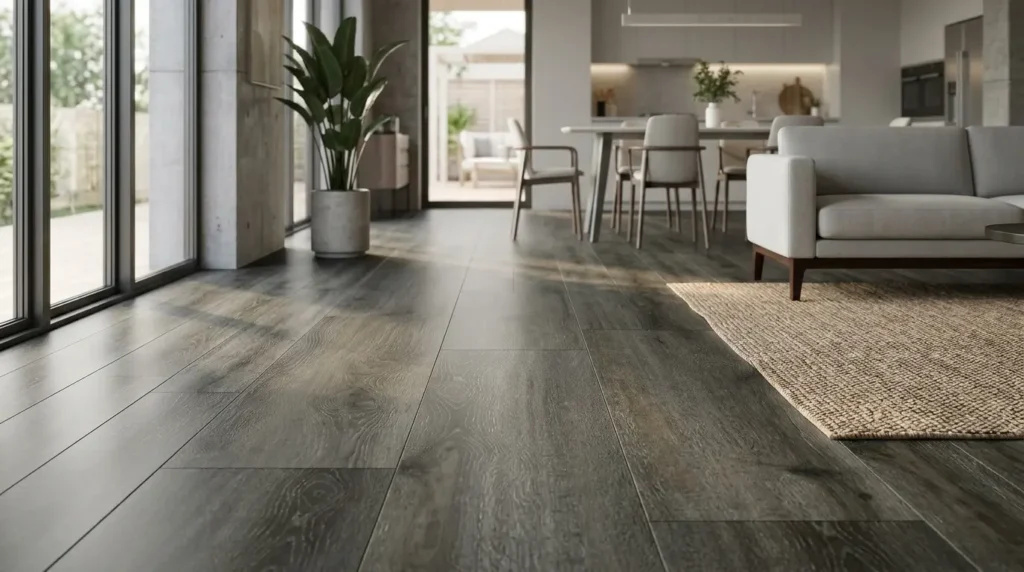
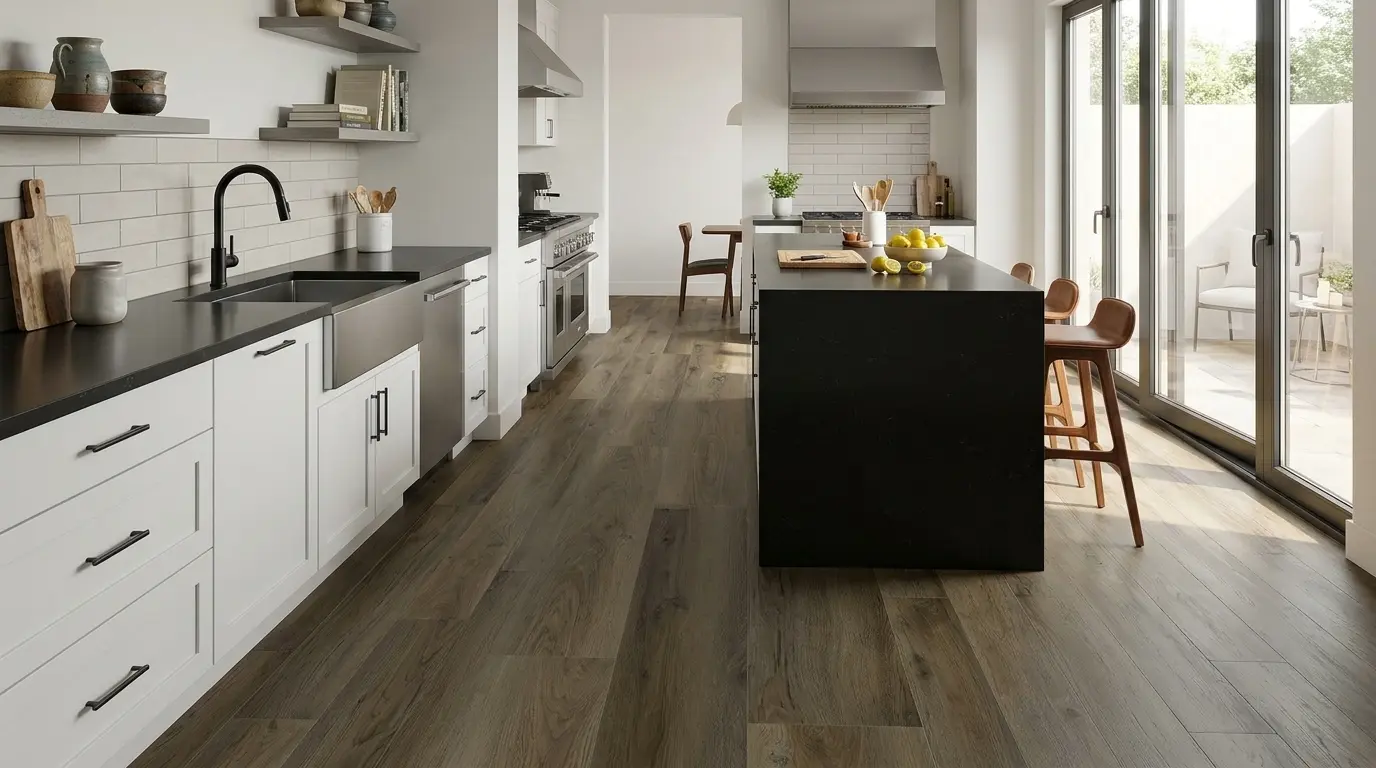
Modern SPC copies oak, walnut, marble, slate, and concrete with convincing texture. You get the look of wood or stone without the upkeep.
6. Comfortable and Quiet
With an attached underlay, SPC feels warmer and softer underfoot than ceramic tile and reduces noise from walking and dropped objects.
7. Budget-Friendly
Compared with natural stone, hardwood, or premium porcelain, SPC offers strong value. To see real numbers, read our SPC flooring cost to install breakdown and compare it with tile installation costs.
Disadvantages of SPC Flooring in Kitchens
An honest guide should cover the downsides too:
- Harder underfoot than cushioned vinyl. If you stand and cook for long periods, an anti-fatigue mat helps.
- Can dent under very heavy point loads. Use felt pads or protectors under heavy appliances and furniture legs.
- Sensitive to direct, intense heat. Never place hot pans, ovens, or space heaters directly on or too close to the planks.
- Needs a flat subfloor. A rigid core can telegraph bumps and may click-lock poorly over uneven surfaces.
- Water can still seep at the edges. The planks are waterproof, but standing water entering seams or perimeter gaps can reach the subfloor. Seal perimeters, especially near the sink and dishwasher.
- Fading in strong sunlight. Prolonged direct UV exposure can discolor some products.
SPC vs Other Kitchen Flooring Options
|
Feature |
SPC |
Laminate |
Hardwood |
Ceramic Tile |
Standard Vinyl |
|
Waterproof |
Excellent |
Poor to fair |
Poor |
Excellent |
Good |
|
Durability |
High |
Medium |
Medium (refinishable) |
Very high |
Medium |
|
Comfort |
Good |
Good |
Good |
Poor (cold, hard) |
Very good |
|
Maintenance |
Very low |
Low |
High |
Medium (grout) |
Low |
|
Install difficulty |
Easy (click-lock) |
Easy |
Hard |
Hard |
Medium |
|
Cost |
Moderate |
Low to moderate |
High |
Moderate to high |
Low |
Bottom line: For most kitchens, SPC gives you the best balance of water resistance, price, and easy installation.
What to Look for When Buying SPC Flooring for a Kitchen
Wear Layer Thickness
The wear layer determines scratch and scuff resistance. For kitchens, choose at least 20 mil (0.5 mm), or a minimum of 12 mil in light residential use. Commercial kitchens and restaurants should go higher.
Total Plank Thickness
For most kitchens, 4 mm to 6 mm works well. Thicker planks add rigidity and can hide minor subfloor flaws. See our full breakdown in best thickness for SPC flooring.
Click-Lock Quality
A strong locking system keeps seams tight and limits water entry. Ask for tested lock strength data from your supplier.
Attached Underlay
IXPE or EVA backing improves comfort and sound control. Check that the product is rated for use over your subfloor type.
Low VOC and Certifications
Kitchens are close to food preparation, so indoor air quality matters. Look for products tested for low emissions and phthalate-free formulation. The U.S. EPA’s indoor air quality resources explain why this matters.
Reliable Manufacturer
Consistent quality, accurate sizing, and proper testing separate good SPC from cheap SPC. For importers and distributors, our guide to the best SPC flooring manufacturer from India explains what to evaluate. For homeowners, our article on how to choose SPC flooring is a good checklist.
How to Install SPC Flooring in a Kitchen
- Acclimate the planks in the room for 24 to 48 hours.
- Prepare the subfloor. It must be clean, dry, and flat (typically within 3 mm over 2 m).
- Leave an expansion gap of about 5 to 10 mm around the perimeter, covered by baseboards or trim.
- Install from the straightest wall, clicking planks together at an angle.
- Do not fix cabinets over the floor. Install the floor around fixed cabinets so it can expand freely, or follow your manufacturer’s instructions.
- Seal around sinks and dishwashers with a flexible, waterproof silicone.
Installation is usually quick. See how long it takes to install SPC flooring for realistic timelines.
How to Care for SPC Flooring in a Kitchen
- Wipe spills promptly, especially oil.
- Sweep or vacuum (soft brush head) regularly.
- Damp-mop with a pH-neutral cleaner. Avoid steam mops, wax, and abrasive pads.
- Use mats at the sink and stove.
- Lift, never drag, heavy appliances.
Who Should (and Shouldn’t) Choose SPC for the Kitchen?
SPC is ideal for: busy family kitchens, rental properties, apartments, restaurants and cafés, and renovations where you need a fast, low-mess install.
Consider another option if: your kitchen has a radiant heating system that exceeds the manufacturer’s temperature limit, or you want the very high heat tolerance of porcelain tile.
Frequently Asked Questions
Is SPC flooring good for kitchens with heavy use?
Yes. With a 20 mil wear layer and a quality click-lock system, SPC handles heavy foot traffic and daily spills well.
Is SPC flooring better than vinyl for kitchens?
Generally yes. SPC is denser and more dimensionally stable than standard vinyl or WPC, so it dents less and handles temperature changes better.
Can you put SPC flooring under kitchen cabinets?
It is usually recommended to install SPC around fixed cabinets, not under them, to let the floor expand and contract naturally. Always follow your manufacturer’s guidelines.
Does SPC flooring handle heat from the oven or dishwasher?
Normal heat from appliances is fine. Avoid hot pans on the floor and avoid blocked sunlight or heaters that raise surface temperature far above room levels.
How long does SPC flooring last in a kitchen?
With proper installation and care, quality SPC lasts 15 to 25 years in residential kitchens.
Is SPC flooring cheaper than tile for kitchens?
Often yes, especially once labor is included. Tile requires grout, adhesive, and longer installation. See our cost comparison.
Final Verdict
So, is SPC flooring good for kitchens? Yes. It offers waterproof performance, strong durability, a wide range of styles, and an easy install at a fair price. Choose the right wear layer (20 mil or more), the right thickness (4 to 6 mm), and a reliable manufacturer, and your kitchen floor will look good for years.
Looking for premium SPC flooring directly from an Indian manufacturer? Explore our SPC flooring collection or read about us on the About Us page. For bulk orders, samples, or export quotes, contact our team today.